Introduction: The Quest for Energy Self-Reliance
India's burgeoning economy and growing population have created an insatiable appetite for energy. As one of the world's largest importers of crude oil, achieving energy self-reliance is not just an economic goal but a strategic imperative. A significant portion of India's domestic oil is trapped in mature reservoirs, where conventional extraction methods are no longer effective. This is where **Enhanced Oil Recovery (EOR)** techniques become critical. EOR methods aim to extract the residual oil left behind, potentially unlocking vast domestic reserves.
In this quest, Indian researchers and petroleum engineers are turning their attention to the nanoscale. Enter **Metal-Organic Frameworks (MOFs)**, a class of crystalline materials that are emerging as a game-changer in chemical and material sciences. With their unprecedented porosity, vast surface area, and tunable chemical properties, **MOF applications** are expanding into diverse fields. One of the most promising of these is their use in EOR, offering innovative solutions to old challenges. This article delves into the fascinating world of **MOF properties**, their application in **enhanced oil recovery**, and the immense opportunities they present for the Indian R&D and industrial landscape.
Decoding Metal-Organic Frameworks (MOFs)
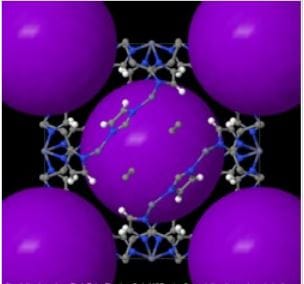
At its core, a **metal-organic framework (MOF)** is like a molecular-level construction set. It consists of two primary components: metal ions or clusters (the 'nodes') and organic molecules called linkers (the 'struts'). When combined through a process known as the **synthesis of MOFs**, these components self-assemble into highly ordered, three-dimensional structures. The result is a material that is mostly empty space, with internal pores of a precise, uniform size.
The key **MOF properties** that make them so extraordinary include:
- Ultra-High Porosity: MOFs possess the highest known surface areas of any material. To put it in perspective, a single gram of a MOF can have a surface area equivalent to a football field. This makes them perfect for **MOFs for gas storage** and adsorption.
- Tunability: By carefully selecting different metal and organic linker combinations, scientists can fine-tune the pore size, shape, and chemical functionality of a MOF. This "designer" aspect allows for the creation of specific **MOF materials for enhanced oil recovery methods** tailored to unique reservoir conditions.
- Chemical Versatility: The internal surfaces of MOFs can be functionalized with various chemical groups. This allows them to act as tiny reaction vessels, making them highly effective in **MOFs in catalysis**, or as carriers, which is crucial for **MOFs in drug delivery**.
- Nanoparticle Hybrids: MOFs can be integrated with other functional materials to create **nanoparticle-MOF hybrids**. These composites combine the properties of both components, leading to enhanced performance in areas like sensing and environmental remediation.
These unique characteristics form the foundation of their potential in tackling complex challenges, from carbon capture to improving the efficiency of oil wells.
Why MOFs are a Game-Changer for EOR
Traditional EOR methods, such as chemical or thermal flooding, face challenges like high cost, environmental concerns, and low efficiency in certain geological formations. **Metal-organic frameworks** offer a multi-pronged approach to overcoming these limitations.
Altering Rock Wettability
MOF nanoparticles can adsorb onto the reservoir rock surface, changing it from oil-wet (oil-loving) to water-wet. This change helps to detach stubborn oil droplets from the rock, allowing them to be swept towards the production well.
Reducing Interfacial Tension (IFT)
MOFs can significantly lower the tension at the oil-water interface. This reduction acts like a powerful detergent, breaking down large oil globules into smaller, more mobile droplets that can easily flow through the porous rock.
Improving Mobility Control
By increasing the viscosity of the injected water, MOF-based nanofluids prevent "viscous fingering," where the water bypasses the oil. This leads to a more uniform and efficient sweep of the reservoir.
Targeted Chemical Delivery
The porous structure of MOFs allows them to be loaded with other EOR chemicals, like surfactants or polymers. These loaded MOFs can then transport their cargo deep into the reservoir and release it under specific conditions (e.g., temperature or pH), ensuring the chemicals work where they are needed most.
Broadening Horizons: Diverse MOF Applications
While their role in **enhanced oil recovery** is a major focus, the versatility of **MOF properties** has opened doors to numerous other high-impact fields relevant to India's industrial and environmental goals.
Gas Storage & Carbon Capture
The exceptional surface area of MOFs makes them ideal candidates for storing gases like hydrogen and methane, crucial for clean energy initiatives. Furthermore, their ability to selectively adsorb CO2 is vital for carbon capture, utilization, and storage (CCUS) technologies, addressing climate change concerns.
Catalysis
In the chemical industry, **MOFs in catalysis** are highly prized. Their well-defined active sites and high surface area can significantly boost the efficiency and selectivity of chemical reactions, leading to greener and more economical production processes for everything from plastics to pharmaceuticals.
Drug Delivery
The biocompatibility and high loading capacity of certain MOFs make them excellent vehicles for targeted **MOFs in drug delivery**. They can protect sensitive drug molecules and release them at specific sites in the body, improving therapeutic outcomes and reducing side effects.
Environmental Applications
The **environmental applications of MOFs** are vast. They are being developed for water purification (removing heavy metals and organic pollutants), air filtration, and as highly sensitive chemical sensors to detect environmental contaminants at very low concentrations.
Opportunities and Trends for MOFs in India
The Indian research community has been quick to recognize the potential of **metal-organic frameworks**. Premier institutions like the IITs, IISc, and CSIR labs are actively engaged in the **synthesis of MOFs** and exploring their applications. For the petroleum industry, the adoption of **MOF materials for enhanced oil recovery methods** presents a multi-billion dollar opportunity to boost domestic production from aging fields in Assam, Gujarat, and the Bombay High.
However, the journey from lab to oilfield has its challenges. Key areas of focus for Indian researchers and industry include:
- Cost-Effective Synthesis: Developing scalable, low-cost methods for the **synthesis of MOFs** is paramount for industrial viability.
- Reservoir Stability: Ensuring that **MOF properties** remain stable under the harsh temperature, pressure, and salinity conditions of real-world oil reservoirs.
- Eco-Friendly Formulations: Focusing on 'green' MOFs made from abundant, non-toxic materials to align with environmental regulations.
- Developing Nanoparticle-MOF Hybrids: Creating advanced composites that offer synergistic benefits, combining the porosity of MOFs with the magnetic or catalytic properties of other nanoparticles for even greater EOR efficiency.
Government initiatives like 'Make in India' and the push for energy independence provide a fertile ground for public-private partnerships to accelerate the development and deployment of these advanced materials.
Frequently Asked Questions (FAQ)
Metal-Organic Frameworks (MOFs) are a class of porous, crystalline materials composed of metal ions or clusters coordinated to organic ligands (linkers). This unique structure results in an exceptionally high surface area and tunable porosity, making them ideal for applications like gas storage, catalysis, and enhanced oil recovery.
In EOR, MOFs can act as nanofluids that alter rock wettability, reduce interfacial tension between oil and water, and improve the mobility of injected fluids. Their high porosity can also be used to carry and deliver other chemicals (like surfactants or catalysts) directly to the oil reservoir, improving extraction efficiency.
The environmental impact of MOFs is a key area of research. Many MOFs are synthesized from benign metals and organic acids. However, their long-term stability, biodegradability, and potential toxicity in reservoir conditions must be thoroughly evaluated for each specific MOF. Research is focused on developing 'green' MOFs from biocompatible and biodegradable components.
The primary challenges include the high cost of synthesis for some MOFs, ensuring their stability under the harsh temperature and pressure conditions of oil reservoirs, and scaling up production from laboratory grams to industrial tons. Overcoming these hurdles is key to their widespread adoption in India's oilfields.
MOFs have a vast range of applications due to their versatile properties. Key areas include gas storage (hydrogen, methane, carbon dioxide), carbon capture, catalysis, chemical separations, drug delivery, and chemical sensing.
Companies like Hiyka specialize in providing a wide range of high-purity, research-grade nanomaterials, including various types of MOFs like ZIF-8, HKUST-1, and Cu-BTC, catering to the needs of Indian researchers and industries.
The Future is Porous: Conclusion
**Metal-Organic Frameworks (MOFs)** represent more than just a scientific curiosity; they are a powerful tool with the potential to significantly impact India's energy security. By improving the efficiency of **enhanced oil recovery**, MOFs can help unlock billions of barrels of domestic oil, reducing import dependency and fueling economic growth. The journey requires continued innovation, strategic investment, and collaboration between academia and industry. For researchers and professionals in India, the field of **MOF applications** is a vibrant and promising frontier, offering a chance to contribute to solving one of the nation's most pressing challenges.