
India, a nation bustling with over a billion people, stands at a critical juncture. While its economy burgeons, a silent crisis looms large: water scarcity. According to NITI Aayog, nearly 600 million Indians face high to extreme water stress, and the demand for potable water is projected to be twice the available supply by 2030. Traditional water purification methods like reverse osmosis (RO), though effective, are energy-intensive and produce significant brine waste, posing environmental challenges. This pressing scenario necessitates a paradigm shift, a technological leap towards more sustainable and efficient solutions. Enter Metal-Organic Frameworks (MOFs), a class of materials promising to redefine the landscape of water treatment. For researchers and industries across India, understanding the potential of desalination using MOFs is not just an academic pursuit; it's a national imperative.
Understanding Metal-Organic Frameworks (MOFs): The Building Blocks of a Revolution
Before diving into their applications, it's essential to grasp what makes these materials so special. MOFs are not just another filter; they are highly engineered crystalline structures with properties that seem almost tailor-made for tackling molecular-level challenges.
What Exactly are MOFs?
Imagine a set of microscopic LEGOs. You have metal-based bricks (ions or clusters) and organic connector pieces (linkers). By carefully choosing and combining these components, you can build vast, three-dimensional structures with intricate internal channels and pores. These are Metal-Organic Frameworks. The true genius of MOFs lies in their customizability. By simply changing the metal or the organic linker, scientists can fine-tune the framework's pore size, shape, and chemical environment. This results in materials with an astonishingly high internal surface area—a single gram of a MOF can have the surface area of a football field—and a remarkable capacity for selectively capturing specific molecules.
The Science of MOF Synthesis
The creation of these materials, or MOF synthesis, is a field of intense research. The most common method is solvothermal synthesis, where the metal salts and organic linkers are mixed in a solvent and heated in a sealed container. Over time, they self-assemble into the desired crystalline MOF structure. Other innovative methods, such as mechanochemical, electrochemical, and microwave-assisted synthesis, are being developed to make the process faster, more energy-efficient, and scalable—key factors for industrial adoption in India. The choice of synthesis method directly influences the final MOF properties, such as crystal size and defect density, which in turn affect its performance.
The Core Application: Desalination Using MOFs
The primary challenge in desalination is separating tiny salt ions (like Na+ and Cl-) from water molecules. MOFs tackle this with unparalleled elegance and efficiency, primarily through two mechanisms: adsorptive separation and membrane-based filtration. This is where MOF applications in water treatment truly shine.
MOF-Based Membranes vs. Traditional Reverse Osmosis
Traditional RO membranes work by applying immense pressure to force water through a dense polymer sheet, which is an energy-intensive process. MOF-based membranes represent a significant upgrade. By integrating MOFs into a polymer matrix or creating ultra-thin MOF-only membranes, we can create filtration systems with precisely defined, sub-nanometer pores. These pores are just wide enough for water molecules to pass through but small enough to block hydrated salt ions. The result? Higher water flux at significantly lower operating pressures, leading to substantial energy savings. Research into nanostructured MOFs is pushing these boundaries even further, promising membranes with near-perfect selectivity.
Benefits for Researchers and Innovators in India
For the Indian R&D community, working with MOF materials for desalination technology research offers a multitude of advantages:
- Unprecedented Efficiency: Achieve higher water purification rates with lower energy consumption compared to conventional methods.
- High Selectivity: Design MOFs to target specific contaminants beyond just salts, including heavy metals, organic pollutants, and microplastics.
- Tunability: The ability to customize MOF structures allows for systematic studies and optimization for specific water sources and conditions found across India.
- Potential for Sustainability: The development of sustainable MOF materials from abundant, non-toxic metals (like iron) and biomass-derived linkers aligns with green chemistry principles.
- Vast Academic Frontier: MOF research is a hot field, offering significant opportunities for novel publications, patents, and collaborative projects.
Exploring the Wider Horizons of MOF Applications
While desalination is a key focus, the remarkable properties of MOFs open doors to a wide array of other critical technologies, positioning them as a platform material for a sustainable future. Many of these fall under the umbrella of MOFs in environmental remediation.
Gas Storage & Separation
The high porosity of MOFs makes them excellent candidates for storing gases like hydrogen and methane. Their tunable pores can also selectively capture carbon dioxide from industrial flue gas, addressing both energy storage and climate change. This is a key area of research in MOFs for chemical storage.
Catalysis
The metal nodes and organic linkers in MOFs can act as catalytic sites. Their well-defined structure allows for reactions to occur with high precision and selectivity, making them powerful catalysts for producing fine chemicals and pharmaceuticals.
Sensing and Diagnostics
When a target molecule enters a MOF's pores, it can cause a change in its optical or electrical properties. This effect can be harnessed to create highly sensitive sensors for detecting pollutants, explosives, or disease biomarkers in the air or in liquids.
Drug Delivery
The non-toxic variants of MOFs can be loaded with drug molecules. Their porous structure protects the drug until it reaches its target in the body, where it can be released in a controlled manner, improving therapeutic efficacy and reducing side effects.
The Indian Landscape: Opportunities and Future Trends
The push for self-reliance ("Make in India") and national missions like the Jal Jeevan Mission create a fertile ground for MOF technology to take root. Indian research institutions are already contributing significantly to the global knowledge base on MOFs. The next step is translating this lab-scale success into pilot plants and eventually, commercial-scale desalination facilities. The focus is shifting towards creating MOFs that are not only efficient but also robust, scalable, and cost-effective, using locally available precursors to build a domestic supply chain.
Challenges on the Path to Commercialization
Despite the immense promise, the road to widespread adoption is not without its obstacles. The long-term chemical and mechanical stability of MOFs in real-world water sources, which contain complex mixtures of organic and inorganic foulants, remains a key research question. Furthermore, bridging the gap between lab-scale synthesis (in milligrams) and industrial production (in tons) while maintaining quality and keeping costs down is the single largest engineering challenge that researchers and industry must solve together.
Recommended MOF Materials for Desalination Research

Cu-BTC, Copper benzene-1,3,5-tricarboxilate
View Product →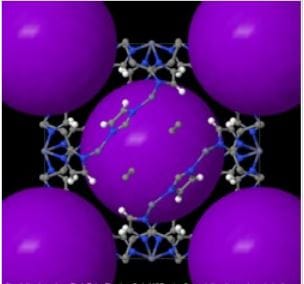
ZIF-8, 2-Methylimidazole zinc salt
View Product →
ZIF-67, 2-Methylimidazole cobalt salt
View Product →
HKUST-1, Copper(II)-benzene-1,3,5-tricarboxylate
View Product →Frequently Asked Questions (FAQ)
Metal-Organic Frameworks (MOFs) are a class of crystalline porous materials composed of metal ions or clusters coordinated to organic ligands (or 'linkers'). This unique structure results in an exceptionally high surface area and tunable porosity, making them ideal for applications like gas storage, catalysis, and, notably, water treatment and desalination.
MOFs can be used in desalination in two primary ways: 1) As highly selective adsorbents that capture salt ions from water. 2) As building blocks for advanced filtration membranes. MOF-based membranes can have precisely tailored pore sizes that allow water molecules to pass through while effectively blocking larger salt ions, often with lower energy requirements than traditional reverse osmosis.
The environmental friendliness of MOFs depends on their components. There is a significant research push towards creating 'green' or sustainable MOF materials using biocompatible metals (like iron or zirconium) and naturally derived organic linkers. Furthermore, their potential to reduce the energy consumption of processes like desalination contributes to their overall sustainability profile.
The primary challenges include: 1) Scalability: Producing large quantities of high-quality MOFs affordably. 2) Stability: Ensuring the MOFs can withstand the harsh chemical and pressure conditions of continuous desalination operations over long periods. 3) Cost: While potentially more energy-efficient, the initial cost of MOF synthesis and membrane fabrication can be high. Researchers are actively working to overcome these hurdles.
For Indian researchers and professionals, sourcing high-purity, reliable MOF materials is crucial for accurate and reproducible results. Hiyka, a Reinste company, offers a comprehensive range of research-grade MOFs, including popular variants like Cu-BTC, ZIF-8, and HKUST-1, supporting the advanced materials research community across India.