
Pioneering the Next Frontier: MOFs in Aerospace
In the relentless pursuit of lighter, faster, and more efficient aerospace technology, material science consistently emerges as the key that unlocks new possibilities. Among the most promising candidates on this frontier are Metal-Organic Frameworks (MOFs). These are not just incremental improvements; they represent a paradigm shift in how we approach challenges in space exploration and aviation. For the vibrant community of Indian researchers and professionals in aerospace, understanding **MOF applications** is no longer a matter of academic curiosity—it's a strategic imperative.
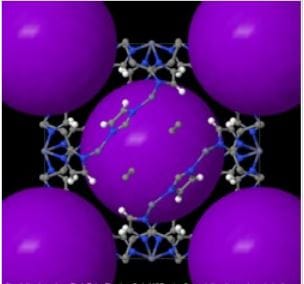
So, what exactly are these wonder materials? Imagine a crystalline structure, built with the precision of a master architect, using metal ions as pillars and organic molecules as linkers. The result is a material with an internal surface area so vast that a single gram can have the surface area of a football field. This incredible porosity makes **Metal-Organic Frameworks** exceptional candidates for tasks that are critical in aerospace environments: capturing, storing, and sensing gases with unparalleled efficiency. As India's space ambitions soar with missions like Gaganyaan and its defense sector modernizes, the **research on MOFs** becomes crucial for developing sovereign capabilities and next-generation technologies.
Why Should Indian Researchers Focus on Aerospace MOFs?
Unprecedented Design Flexibility
MOFs are highly tunable. Researchers can systematically alter the metal nodes and organic linkers to fine-tune properties like pore size, shape, and chemical functionality for specific aerospace applications, from oxygen storage to trace contaminant removal.
Lightweight & High-Performance
Every gram counts when escaping Earth's gravity. MOFs offer a lightweight alternative to traditional materials like activated carbon or zeolites for gas storage and purification, directly translating to reduced payload mass and lower launch costs.
Contribution to National Missions
Expertise in **MOFs in aerospace** can directly support India's strategic goals. Developing indigenous MOF-based life support systems for ISRO or advanced chemical sensors for DRDO enhances national self-reliance and technological prowess.
Vast Publication & Patent Potential
The field of **MOF application research** is dynamic and expanding. This presents a fertile ground for Indian scientists to publish high-impact papers, file patents, and establish themselves as global leaders in this niche yet critical domain of material science.
Key Industrial Applications of MOFs in the Aerospace Sector

Advanced Life Support Systems (CO₂ Capture & O₂ Storage)
In the confined environment of a spacecraft or a future lunar base, managing breathable air is a life-or-death challenge. MOFs offer a breakthrough. Certain MOFs can selectively adsorb carbon dioxide (CO₂) from the cabin air with much higher efficiency and lower energy penalty than current systems. Others are being engineered to store oxygen (O₂) at low pressures, providing a safer and lighter alternative to high-pressure gas cylinders. This dual-use potential is a game-changer for long-duration space missions.

High-Density Hydrogen & Methane Storage
As the aerospace industry explores cleaner fuels like hydrogen (H₂) and methane (CH₄), safe and dense storage becomes the primary hurdle. MOFs, with their vast internal surface area, can adsorb large quantities of these gases at moderate pressures and temperatures. This research on **aerospace MOFs** could pave the way for hydrogen-powered drones, high-altitude platforms, and even greener rocket propulsion systems, significantly improving energy density over traditional storage methods.

Ultra-Sensitive Chemical Sensors
Early detection of fuel leaks (e.g., hydrazine), toxic gases, or humidity fluctuations is critical for mission safety. MOFs can be integrated into sensors where the adsorption of a specific target molecule triggers a detectable change in optical or electrical properties. The tunability of MOFs allows for the creation of sensors with extreme selectivity and sensitivity, far surpassing current technologies. This is a key area of **MOF application research** for ensuring the health of both crew and equipment.
The Indian Horizon: Opportunities and Future Trends
The convergence of India's 'Make in India' initiative and its ambitious space program creates a unique ecosystem for advanced materials research. The **industrial applications of MOFs** are not a distant dream but an immediate opportunity. Institutions like the Indian Institutes of Technology (IITs), the Indian Institute of Science (IISc), and various CSIR labs are already engaged in foundational materials science. The next logical step is to bridge this foundational research with the specific, demanding requirements of organizations like ISRO and DRDO.
Imagine MOF-based filters being used in the life support systems of the Gaganyaan module, or MOF-coated sensors providing real-time cabin air quality data. The **benefits of MOFs**, particularly their low weight and high efficiency, align perfectly with the goals of making space access more affordable and sustainable. For Indian professionals, this translates into a demand for chemists, material scientists, and engineers who can synthesize, characterize, and integrate these **MOF technologies**. The government's focus on fostering a domestic high-tech manufacturing base provides a tailwind for startups and companies looking to commercialize these advanced materials, positioning India as a key player in the global aerospace supply chain.
Frequently Asked Questions
Metal-Organic Frameworks (MOFs) are a class of porous materials made of metal ions or clusters coordinated to organic ligands to form one-, two-, or three-dimensional structures. Their defining features are extremely high porosity, large surface areas, and tunable chemical properties, making them ideal for applications like gas storage, separation, and catalysis.
In aerospace, weight, efficiency, and safety are paramount. MOFs offer lightweight solutions for critical functions such as storing breathable air for astronauts, capturing CO2 in life support systems, filtering cabin air, and serving as sensitive detectors for fuel leaks or hazardous gases. Their efficiency can significantly reduce launch mass and improve mission longevity.
India has a rapidly growing aerospace and defense sector, with organizations like ISRO and DRDO constantly seeking innovative materials. MOF research presents a significant opportunity for Indian scientists to develop indigenous, high-performance materials for space missions, advanced aircraft, and environmental control systems, thus reducing reliance on imported technologies and fostering self-sufficiency.
Yes, several types of MOFs, such as Cu-BTC, ZIF-8, and HKUST-1, are commercially available in research quantities from specialized suppliers like Hiyka. This accessibility allows researchers in India and worldwide to experiment with and integrate MOFs into novel applications without needing to synthesize them from scratch.
Related Products for Your Research


Ready to Start Your Research on MOF Technologies?
Access high-purity MOFs and accelerate your next breakthrough in aerospace technology. Explore our catalog of advanced materials.
Browse MOFs on Hiyka