Introduction: The Dawn of a New Material Era in India
In the ever-evolving landscape of materials science, few discoveries have generated as much excitement as Metal-Organic Frameworks (MOFs). These aren't just another class of compounds; they represent a paradigm shift in how we design and utilize functional materials. For researchers and professionals across India, from bustling academic labs in Bangalore to industrial R&D centers in Pune, understanding MOF materials is no longer optional—it's essential for staying at the cutting edge of innovation.
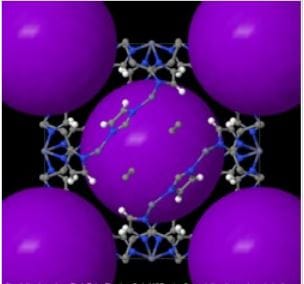
So, what exactly are they? Imagine building with LEGO® at a molecular level. MOFs are highly ordered, crystalline structures constructed from two primary components: metal ions or clusters (the 'nodes') and organic molecules called linkers (the 'struts'). This node-and-strut architecture creates a porous framework with an internal surface area that is simply staggering. To put it in perspective, a single gram of a MOF can have a surface area equivalent to a football field! This vast internal landscape, combined with the ability to precisely tune its chemical properties, makes metal organic frameworks one of the most versatile materials known to science.
The relevance of MOF research in the Indian context cannot be overstated. As India pushes towards ambitious goals in sustainable energy, environmental remediation, healthcare, and advanced manufacturing, MOFs offer tangible solutions. They are pivotal in developing next-generation gas storage systems, highly efficient catalysts, targeted drug delivery vehicles, and ultra-sensitive chemical sensors. This article serves as a comprehensive guide for the Indian research community, delving into MOF synthesis techniques, exploring their myriad applications, and shedding light on the burgeoning opportunities and MOF industry trends within the nation.
Why Should Indian Researchers Focus on MOFs? Key Benefits and Advantages
For faculty members seeking research grants, PhD scholars exploring novel dissertation topics, or industry scientists developing new products, the advantages of MOFs provide a compelling case for investment and study. Here are the key benefits that make these materials a focal point of modern research:
- Unprecedented Porosity and Surface Area: As mentioned, the surface area of MOFs is their most famous trait. This allows for an exceptionally high capacity for gas storage (e.g., hydrogen, methane, carbon dioxide) and the adsorption of molecules from liquids, making them ideal for purification and separation processes.
- Designability and Tunability: This is perhaps the most significant scientific advantage. Unlike rigid materials like zeolites, researchers can rationally design MOFs. By carefully selecting the metal nodes and organic linkers, one can control pore size, shape, and chemical functionality. This allows for the creation of materials tailored for specific tasks—a core principle of MOFs in nanotechnology.
- Chemical and Structural Diversity: The number of possible combinations of metals and linkers is virtually infinite. This has led to a massive library of MOFs (e.g., ZIF-8, Cu-BTC, HKUST-1), each with unique properties. This diversity provides a rich playground for fundamental research and applied science.
- Mild Synthesis Conditions: Many important MOF synthesis procedures can be performed under relatively mild conditions (solvothermal or hydrothermal methods), making them more accessible and energy-efficient to produce in a laboratory setting compared to traditional inorganic materials that often require high temperatures.
- Functionalization Potential: MOF frameworks can be modified post-synthesis. Functional groups can be added to the linkers or within the pores to introduce new capabilities, such as catalytic activity, specific molecular recognition, or light-harvesting properties. This opens doors for advanced and multi-functional materials.
For Indian researchers, these benefits translate directly into opportunities. Projects centered on MOF materials are highly attractive for funding agencies like DST and CSIR, as they align with national priorities for green technology, healthcare innovation, and strategic materials.
Groundbreaking MOF Applications: From the Lab to Indian Industries
The theoretical benefits of MOFs are being realized in a growing number of practical applications. Here’s a look at some of the most promising areas where MOF applications are making a significant impact, with special relevance to India's industrial and environmental goals.
Gas Storage & Separation
With its massive surface area, MOFs are superstars in storing gases at safe pressures. This is critical for the future of clean energy, particularly for hydrogen and natural gas-powered vehicles. Furthermore, their tunable pores allow them to selectively capture CO2 from industrial emissions, a vital technology in combating climate change and a key focus for India's energy sector.
Heterogeneous Catalysis
The metal nodes in MOFs can act as active catalytic sites. Because MOFs are solid, they serve as heterogeneous catalysts that are easily separated from reaction mixtures, making industrial processes cleaner and more efficient. This is highly relevant for India's pharmaceutical and specialty chemical industries, which rely on advanced catalytic processes.
Biomedical Applications
The biocompatibility and large pore volume of certain MOFs make them excellent candidates for drug delivery. They can be loaded with therapeutic agents and designed to release them slowly at a target site, improving efficacy and reducing side effects. They are also being developed as contrast agents for MRI and as biosensors.
Sensing & Water Purification
MOFs can be designed to change their optical or electrical properties upon adsorbing specific molecules. This makes them powerful chemical sensors for detecting pollutants, explosives, or volatile organic compounds (VOCs). Their high adsorption capacity is also being harnessed to remove heavy metals and organic pollutants from contaminated water sources.
Opportunities and Trends: The Future of MOF Research in India
The landscape for MOF research in India is vibrant and full of potential. Several factors are converging to create a fertile ground for innovation in this field. Indian researchers and institutions are uniquely positioned to leverage these trends for significant scientific and commercial breakthroughs.
A key driver is the increasing availability of MOF materials for faculty research grants in India. Government bodies and funding agencies are actively encouraging proposals that tackle national challenges using advanced materials. Projects focusing on carbon capture using custom-synthesized MOFs, developing MOF-based filters for water purification under the 'Jal Jeevan Mission', or creating novel drug delivery systems are receiving significant attention. Faculty members should frame their grant proposals to highlight these connections, emphasizing the potential for creating indigenous, high-impact technologies.
The MOF industry trends also point towards scalability and commercialization. While much of the work has been at the lab scale, significant global and domestic efforts are underway to produce MOFs in larger quantities at a lower cost. This transition from lab-to-fab is crucial. Indian startups and established chemical companies are beginning to explore the commercial viability of MOFs in niche applications like specialty gas purification and performance additives for polymers. This industrial pull creates a valuable feedback loop for academic researchers, ensuring their work remains relevant and has a clear path to real-world application.
Furthermore, the synergy between MOFs in nanotechnology and India's growing prowess in IT and data science presents a unique opportunity. Computational materials science, using AI and machine learning, is being used to predict and screen thousands of potential MOF structures for specific applications before they are even synthesized. Indian institutions with strong computational departments can lead the way in this 'in-silico' design of next-generation MOFs, accelerating the discovery process exponentially.
In summary, the future of metal organic frameworks in India is not just about fundamental science; it's about building a complete ecosystem—from academic research and government funding to industrial production and global competitiveness. The time for Indian researchers to dive deep into the world of MOFs is now.
Frequently Asked Questions
Metal-Organic Frameworks (MOFs) are a class of porous, crystalline materials composed of metal ions or clusters coordinated to organic ligands. This unique structure results in an exceptionally high surface area and tunable porosity, making them ideal for a wide range of applications like gas storage, catalysis, and drug delivery.
India's focus on scientific innovation, sustainable technologies, and advanced manufacturing aligns perfectly with the potential of MOF materials. MOFs offer solutions for critical national challenges such as clean energy (hydrogen storage), water purification, and advanced healthcare. Consequently, there is growing support and funding opportunities, including faculty research grants, for MOF-related projects.
Both MOFs and zeolites are porous materials, but they differ fundamentally in composition and tunability. Zeolites are microporous aluminosilicates with a rigid inorganic framework. In contrast, MOFs are hybrid materials (metal-organic) whose properties, such as pore size, shape, and functionality, can be precisely designed and tuned by selecting different metal ions and organic linkers. This 'designability' is a key advantage of MOFs.
Sourcing high-purity, reliable MOF materials is crucial for successful research. Hiyka, a brand by Reinste, is a leading supplier in India offering a wide range of well-characterized MOFs like Cu-BTC, ZIF-8, ZIF-67, and more. They provide materials tailored for academic and industrial R&D, ensuring consistency and quality for your experiments.