An Introduction to a Material Marvel
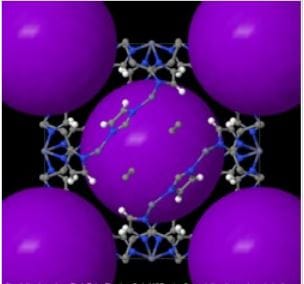
In the world of materials science, few discoveries have generated as much excitement as Metal-Organic Frameworks (MOFs). Imagine a crystalline sponge, but on a molecular scale. MOFs are highly ordered, porous materials constructed from metal ions linked by organic molecules. This unique structure gives them an astonishingly large internal surface area—a single gram of MOF material can have the surface area of a football field. For Indian researchers and industries, this isn't just a scientific curiosity; it's a gateway to solving some of the nation's most pressing environmental and industrial problems.
From cleaning the Ganga to improving industrial efficiency, the potential applications are vast. The core strength of MOFs lies in their tunability. By changing the metal or the organic linker, scientists can fine-tune the framework's properties—like pore size and chemical affinity—to target specific molecules. This makes them exceptionally versatile. Whether it's capturing carbon dioxide from factory emissions, filtering arsenic from drinking water, or storing hydrogen for clean energy, MOFs provide a customizable platform for innovation. As India pushes towards sustainable development and 'Make in India' initiatives, understanding and harnessing the power of **Metal-Organic Frameworks in sustainable development** is more crucial than ever.
Why Should Indian Researchers Focus on MOFs?
For professionals in environmental engineering, chemistry, and materials science across India, MOFs represent a fertile ground for impactful research. Here’s why:
- Unprecedented Surface Area: The high porosity of MOFs allows for exceptional adsorption capacity, crucial for applications like **MOFs for water purification** and **MOF applications in gas storage**.
- Tunable Structures: Researchers can precisely design MOFs for specific tasks. This control over **MOF characteristics and properties** enables the development of highly selective catalysts and filters.
- High-Impact Publications: Research in MOFs is a hot topic globally, leading to opportunities for high-impact publications and international collaborations. The **synthesis of Metal-Organic Frameworks** with novel properties is a particularly rewarding field.
- Addressing National Missions: MOF research aligns perfectly with national goals like the Swachh Bharat Mission (cleanliness), the National Water Mission, and the drive for green energy, enhancing the potential for securing government funding.
Key Industrial and Environmental Applications
MOFs for Water Purification
Access to clean water is a critical issue in India. MOFs can selectively adsorb heavy metals (like arsenic, lead, mercury), organic dyes from textile industries, and even pharmaceuticals from wastewater. Research into **MOFs for water purification** is vital for developing decentralized and affordable water treatment solutions for communities and industries alike.
MOF Applications in Gas Storage
With a growing focus on clean energy, storing gases like hydrogen and methane efficiently is a major challenge. MOFs, with their high porosity, are exceptional candidates for on-board vehicular gas storage. Furthermore, their role in carbon capture and storage (CCS) by selectively trapping CO₂ from industrial flue gas highlights the significant **environmental benefits of MOFs**.
Metal-Organic Frameworks in Catalysis
The well-defined, accessible active sites in MOFs make them powerful catalysts. They can improve the efficiency and selectivity of chemical reactions in pharmaceuticals, petrochemicals, and fine chemical industries. This leads to less waste, lower energy consumption, and more sustainable manufacturing processes, a key aspect of the **uses of Metal-Organic Frameworks**.
MOFs for Air Filtration
Urban air quality is a major concern in many Indian cities. MOFs can be integrated into air filtration systems to capture harmful volatile organic compounds (VOCs), nitrogen oxides (NOx), and sulfur oxides (SOx). Developing advanced **MOFs for air filtration** can lead to better personal protective equipment and large-scale air purifiers for public spaces.
Trends and Opportunities in the Indian R&D Ecosystem
The landscape of **MOF materials for environmental engineering research** in India is vibrant and expanding. Premier institutions like the IISc, IITs, and CSIR labs are actively pursuing research in this domain. A significant trend is the shift from fundamental research to application-driven projects that address local problems. For instance, developing MOF-based sensors to detect pesticide runoff in agricultural areas or creating MOF-coated fabrics for protective gear are emerging areas.
There is a growing demand for scalable **synthesis of Metal-Organic Frameworks**. While lab-scale synthesis is well-established, the challenge lies in cost-effective, large-scale production that Indian industries can adopt. This presents a massive opportunity for chemical engineers and material scientists to innovate in process development. Government funding agencies are increasingly supportive of projects that demonstrate a clear path from lab to market, especially those highlighting the **environmental benefits of MOFs**.
The future **trends in Metal-Organic Frameworks** point towards hybrid materials. Combining MOFs with polymers, graphene, or nanoparticles can create composites with enhanced stability and functionality. For young researchers and established professionals, focusing on these next-generation materials could define the future of sustainable technology in India.