Metal-Organic Frameworks (MOFs): A Comprehensive Guide to Synthesis, Applications, and Future Trends
Discover the revolutionary potential of nanostructured MOFs, from advanced synthesis techniques to their groundbreaking applications in Indian industry and research.
Explore NowAn Introduction to Metal-Organic Frameworks
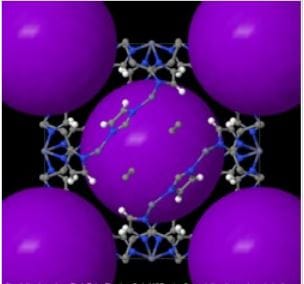
In the dynamic world of materials science, few discoveries have generated as much excitement as Metal-Organic Frameworks (MOFs). These remarkable materials, constructed from metal ions linked by organic molecules, are like molecular scaffolding with unprecedented versatility. Imagine a crystalline sponge with pores so small they can be tailored to trap specific molecules. That, in essence, is a MOF. Their defining features—enormous internal surface areas (a single gram can have the surface area of a football field), tunable pore sizes, and chemically versatile structures—make them one of the most promising classes of advanced materials today.
For the Indian research and development (R&D) landscape, MOFs are not just a scientific curiosity; they are a technological catalyst. As India pushes towards self-reliance ('Aatmanirbhar Bharat') and global leadership in manufacturing and technology, advanced materials are a critical pillar. MOF research trends align perfectly with national priorities, offering innovative solutions for clean energy, environmental remediation, and healthcare. From storing hydrogen for green vehicles to capturing carbon dioxide from industrial emissions, and from targeted drug delivery to sophisticated chemical sensors, the applications of MOFs are vast and directly relevant to solving India's most pressing challenges. This article delves into the core aspects of MOFs—their synthesis, benefits, applications, and the exciting opportunities they present for researchers and industries across India.
Why Should Researchers Focus on MOFs?
- Unprecedented Porosity and Surface Area: MOFs possess exceptionally high surface areas, allowing for greater interaction with gases and liquids, which is crucial for storage and catalysis.
- Tunable Structure: Researchers can precisely control the pore size, shape, and chemical environment within MOFs by choosing different metal and organic components. This "designer" aspect is unique to these advanced materials.
- Versatility in Application: Their tunable nature means MOFs can be adapted for a wide range of uses, from industrial-scale chemical separations to sensitive medical diagnostics.
- High Research Impact: MOF research is a hot field, leading to high-impact publications, patents, and collaborative opportunities. Working with nanostructured MOFs places researchers at the forefront of materials science.
- Alignment with National Goals: Research into MOF applications, such as clean water, energy storage (H2, CH4), and carbon capture, directly contributes to India's strategic objectives like the National Hydrogen Mission.
Industrial Applications of MOFs
Gas Storage and Separation
The high porosity of MOFs makes them ideal candidates for storing gases like hydrogen, methane, and carbon dioxide at safer pressures. Their tunable pores also allow for the selective separation of gases from mixtures, a critical process in the energy and chemical industries.
Catalysis
MOFs can act as highly efficient catalysts. The metal nodes can serve as active catalytic sites, and the porous structure allows reactants to access these sites easily. This has major implications for producing fine chemicals and pharmaceuticals more sustainably.
Biomedical Applications & Drug Delivery
The biocompatible nature of some MOFs, combined with their ability to encapsulate large molecules, makes them perfect for targeted drug delivery. Drugs can be loaded into the MOF's pores and released slowly at a specific site in the body, improving efficacy and reducing side effects.
MOF Research Trends & Opportunities in India
The landscape of MOF research in India is vibrant and expanding rapidly. Indian institutions are increasingly contributing to the global knowledge base on these advanced materials. A key trend is the focus on developing cost-effective and scalable MOF synthesis techniques using locally available precursors. This approach not only reduces dependency on expensive imported chemicals but also aligns with the 'Make in India' initiative, paving the way for domestic production of high-performance materials.
Another significant area is the exploration of nanostructured MOFs for environmental applications. With rising concerns over air and water pollution, Indian scientists are designing MOFs specifically for capturing pollutants like CO2, SOx, and NOx from industrial flue gases, as well as for removing heavy metals and organic contaminants from water. These Metal-Organic Framework applications are critical for sustainable industrial growth and public health.
Furthermore, the synergy between MOFs and other materials is a burgeoning field. Researchers are creating composites by integrating MOFs with polymers, graphene, and carbon nanotubes to enhance their mechanical stability and electrical conductivity. These hybrid materials open up new frontiers in applications like supercapacitors, batteries, and advanced sensors. For young researchers and established professionals, the field of MOF materials for engineering research projects offers immense opportunities for innovation, securing research grants, and fostering collaborations between academia and industry.
Recommended MOFs for Your Research


Frequently Asked Questions
Metal-Organic Frameworks (MOFs) are a class of porous materials consisting of metal ions or clusters coordinated to organic ligands to form one-, two-, or three-dimensional structures. Their high porosity, large surface area, and tunable nature make them ideal for applications like gas storage, catalysis, and drug delivery.
Common synthesis techniques for MOFs include solvothermal/hydrothermal synthesis, microwave-assisted synthesis, electrochemical synthesis, and mechanochemical synthesis. The chosen method affects the MOF's properties, such as crystal size, morphology, and purity.
For India, MOFs offer promising solutions to national challenges like clean energy (natural gas and hydrogen storage), water purification, and advanced healthcare. They represent a vibrant research area with significant potential for innovation, patents, and industrial collaboration, aligning with initiatives like 'Make in India' and the 'National Hydrogen Mission'.
Platforms like Hiyka.com provide Indian researchers with access to a wide range of high-purity, research-grade MOFs and other advanced materials. They offer reliable sourcing, ensuring consistency and quality for your experiments and projects.
Ready to Advance Your Research with MOFs?
Explore our extensive catalog of high-purity MOFs and other advanced materials. Find the perfect components for your next breakthrough project today.
Browse Products