An Introduction to Ionic Liquids: The Future of Chemical Science
In the ever-evolving landscape of chemical research and industrial application, a unique class of compounds known as ionic liquids (ILs) has emerged as a game-changer. Unlike traditional salts that are crystalline solids at room temperature, ionic liquids are salts that melt below 100°C, existing as liquids under ambient conditions. Composed entirely of ions—large organic cations and various anions—their properties can be meticulously tuned by altering these ionic components. This customizability opens up a universe of possibilities, making them one of the most exciting materials for scientific exploration today.
For the vibrant R&D community in India, from bustling academic labs in Bangalore to industrial hubs in Gujarat, understanding ionic liquids' properties is paramount. Their negligible vapor pressure makes them environmentally friendlier alternatives to volatile organic compounds (VOCs), while their exceptional thermal stability allows them to perform under extreme temperature conditions where conventional solvents fail. This blog delves deep into the world of ILs, focusing on their thermal characteristics, diverse applications, and the safety protocols essential for their handling. Whether you are a seasoned researcher or a student just starting, this guide aims to be your comprehensive resource for harnessing the power of ionic liquids.
Why Researchers are Turning to Ionic Liquids: Key Benefits
-
Exceptional Thermal Stability: Many ionic liquids can withstand temperatures exceeding 300-400°C, making them ideal for high-temperature synthesis and catalysis, a critical factor in many industrial processes.
-
Negligible Volatility: Their extremely low vapor pressure significantly reduces air pollution and workplace exposure risks associated with volatile organic solvents, aligning with green chemistry principles.
-
Tunable Properties: By simply swapping the cation or anion, researchers can fine-tune properties like viscosity, polarity, conductivity, and ionic liquids and solubility to meet the precise needs of a specific application.
-
High Ionic Conductivity: This property makes them excellent electrolytes for electrochemical devices. The high ionic liquids conductivity is fundamental for developing next-generation batteries, supercapacitors, and sensors.
-
Wide Electrochemical Window: Ionic liquids can operate at a broader range of voltages without decomposing, a crucial advantage for ionic liquids in electrochemistry and energy storage systems.
Revolutionizing Industries: Key Applications of Ionic Liquids
Green Chemistry & Catalysis
As non-volatile solvents, ILs provide a safer, recyclable medium for chemical reactions. Their ability to dissolve diverse reactants and stabilize catalysts enhances reaction rates and yields, making ionic liquids applications in synthesis highly valuable.
Energy Storage & Electrochemistry
The high ionic liquids conductivity and wide electrochemical window make them superior electrolytes for lithium-ion batteries, supercapacitors, and dye-sensitized solar cells, paving the way for more efficient and safer energy solutions.
Nanotechnology & Materials Science
In ionic liquids in nanotechnology, they act as templates and stabilizers for synthesizing nanoparticles with controlled size and shape. Their unique environment prevents agglomeration, leading to advanced materials with novel properties.
Biomass Processing
Certain ionic liquids can effectively dissolve cellulose, a major component of biomass that is notoriously difficult to process. This application is crucial for converting agricultural waste into biofuels and other valuable chemicals, a significant area for India.
Gas Capture (CO2)
Functionalized ionic liquids can be designed to selectively capture CO2 from industrial emissions. This application is vital for combating climate change and aligns with global sustainability goals, presenting a major opportunity for Indian industries.
Pharmaceuticals & Drug Delivery
The concept of creating active pharmaceutical ingredients (APIs) in liquid form using ionic liquid technology can enhance drug solubility and bioavailability. This is a frontier area where ionic liquids synthesis meets medicine.
The Indian Perspective: Opportunities and Future Trends
India's scientific community is rapidly embracing advanced materials, and ionic liquids are at the forefront of this movement. With government initiatives like "Make in India" and a strong focus on sustainable development, the demand for innovative chemical solutions is at an all-time high. The unique ionic liquids properties, especially their high thermal stability and green credentials, position them as a key enabler for growth in several sectors.
Indian researchers are particularly exploring ionic liquids applications in energy storage, aiming to develop indigenous battery technology to power the nation's electric vehicle ambitions. Furthermore, the use of ILs in biomass conversion aligns perfectly with India's goal of reducing dependency on fossil fuels by utilizing its vast agricultural resources. Understanding the nuances of ionic liquids thermal stability testing methods like TGA is becoming a standard skill in Indian labs, ensuring that the materials used are robust and reliable for these critical applications. As research flourishes, so does the need for clear guidelines on ionic liquids safety, a topic of growing importance in academic and industrial settings nationwide.
Frequently Asked Questions
Ionic liquids (ILs) are salts that exist in a liquid state at temperatures below 100°C. They are composed entirely of ions (cations and anions) and are known for their unique properties like low vapor pressure, high thermal stability, and tunable physicochemical characteristics.
Thermal stability is a critical property because it determines the operational temperature range of an ionic liquid. High thermal stability of ionic liquids allows them to be used in high-temperature applications such as chemical synthesis, catalysis, and energy storage without decomposing, ensuring process efficiency and safety.
Ionic liquids have diverse applications, including as green solvents in organic synthesis, electrolytes in batteries and supercapacitors, catalysts in chemical reactions, and as media for nanomaterial synthesis. Their unique properties make them suitable for use in electrochemistry, nanotechnology, and pharmaceuticals.
While often termed 'green solvents' due to their low volatility, the ionic liquids safety depends on their specific chemical structure. Some can be toxic or corrosive. It is crucial to follow standard laboratory safety protocols, including using personal protective equipment (PPE) and consulting the Safety Data Sheet (SDS) for each specific ionic liquid.
The most common method for ionic liquids thermal stability testing methods is Thermogravimetric Analysis (TGA). TGA measures the mass of a sample over time as the temperature changes, allowing researchers to determine the decomposition temperature at which the ionic liquid starts to degrade.
Explore Our Range of Ionic Liquids

Trioctylmethylphosphonium methylcarbonate
View Product →
Triisobutylmethylphosphonium tosylate
View Product →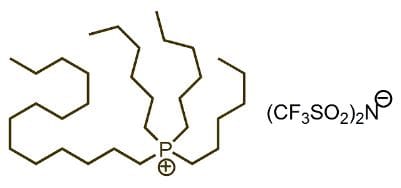
Trihexyltetradecylphosphonium bis(trifluoromethylsulfonyl)imide
View Product →
Trihexyltetradecylphosphonium dicyanamide
View Product →Ready to Advance Your Research?
Explore our extensive catalog of high-purity ionic liquids and find the perfect material for your next breakthrough.
Browse Our Products