An Introduction to the 'Designer Solvents' Fuelling India's R&D
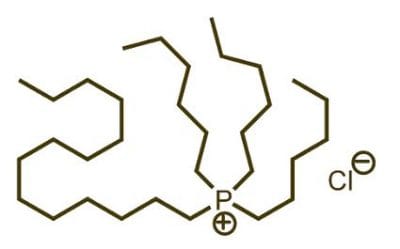
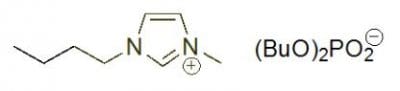
Imagine a salt that’s liquid at room temperature. This isn't science fiction; it's the reality of ionic liquids (ILs), a class of compounds rapidly moving from academic curiosity to industrial game-changer. Composed entirely of ions, these "designer solvents" possess a unique set of properties that are capturing the attention of researchers and industries across India. With negligible vapor pressure, high thermal stability, and the remarkable ability to be fine-tuned for specific tasks, ILs represent a paradigm shift away from volatile, often toxic, organic solvents.
For a nation like India, which is on a fast track to industrial growth while simultaneously grappling with environmental challenges, the rise of **green ionic liquids** is not just timely but essential. Their adoption aligns perfectly with national initiatives like 'Make in India' and the push for sustainable development. From enhancing pharmaceutical synthesis to developing next-generation batteries, the potential of **ionic liquid applications** is vast. This article explores the properties, benefits, and burgeoning market trends of these materials, highlighting the opportunities they present for Indian scientists and businesses to lead in a new era of green chemistry and technology.
Why Researchers in India are Turning to Ionic Liquids
For the Indian research community, from CSIR labs to top-tier universities, ionic liquids offer a competitive edge. Here are the tangible benefits driving their adoption:
-
Enhanced Chemical Processes
The unique solvency of ILs can lead to higher reaction rates, improved selectivity, and better yields, making research more efficient and productive. This is a key aspect of **ionic liquids in synthesis**.
-
Unlocking New Research Avenues
Their ability to dissolve materials like cellulose and lignin, which are insoluble in conventional solvents, opens up new frontiers in biomass conversion and sustainable materials science, crucial for India's bio-economy.
-
Superior Safety & Sustainability
With negligible volatility and non-flammability, ILs create a safer lab environment. Their reusability supports **ionic liquids and sustainability**, reducing chemical waste and aligning projects with global green standards, which can be pivotal for securing **ionic liquids for industrial research funding**.
Transforming Industries: Key Applications of Ionic Liquids
Advanced Catalysis
In the chemical and pharmaceutical sectors, **ionic liquids in catalysis** are revolutionizing processes. They can act as both a solvent and a catalyst (a "cat-solvent"), immobilizing expensive metal catalysts for easy separation and reuse. This drastically cuts down production costs and waste, a significant advantage for India's competitive manufacturing landscape.
Energy Storage & Generation
The quest for safer, more efficient batteries is a global priority. **Ionic liquids for energy** applications are a leading solution. Their non-flammability and wide electrochemical window make them ideal electrolytes for lithium-ion batteries, supercapacitors, and dye-sensitized solar cells (DSSCs), directly supporting India's renewable energy goals.
Biomass Valorization
India is rich in agricultural residue. Ionic liquids can efficiently dissolve raw biomass like cellulose and lignin, enabling their conversion into biofuels, biochemicals, and advanced materials. This creates a circular economy, turning agricultural waste into high-value products and promoting rural development.
Carbon Capture & Utilization
As India addresses its carbon footprint, ILs offer a promising technology. Certain ionic liquids have a high affinity for CO2, allowing for its selective capture from industrial flue gas. This captured CO2 can then be converted into useful chemicals, turning a liability into an asset and demonstrating a viable path for **industrial ionic liquids**.
Market Trends and Opportunities in India
The **ionic liquids market trends** point towards significant growth, and India is poised to be a key player. The global market is expanding, driven by stringent environmental regulations and the demand for sustainable technologies. For India, this translates into a multi-faceted opportunity. The domestic demand for **industrial ionic liquids** is expected to rise, particularly in pharmaceuticals, specialty chemicals, and energy storage sectors. Indian companies that invest in this technology can reduce their environmental impact, improve process efficiency, and create products for both local and global markets.
Furthermore, there's a growing ecosystem for R&D. Government bodies and private enterprises are increasingly open to providing **ionic liquids for industrial research funding**, recognizing their potential to solve critical challenges. Understanding the unique **ionic liquid properties** allows for the development of bespoke solutions for local problems, such as water purification or efficient metal extraction from e-waste. The challenge and opportunity lie in developing cost-effective synthesis routes to make these wonder-solvents accessible to a broader range of industries, solidifying India's position as a hub for green innovation.
Frequently Asked Questions
Ionic liquids (ILs) are salts that are liquid below 100°C. Unlike traditional salts like table salt, which have very high melting points, ILs are composed of large, asymmetric organic cations and various anions. This structure prevents them from packing efficiently into a crystal lattice, keeping them liquid at or near room temperature. Their unique properties, such as negligible vapor pressure, high thermal stability, and tunable solvency, make them highly attractive for various industrial applications.
Ionic liquids are often called 'green ionic liquids' because they address several drawbacks of traditional volatile organic compounds (VOCs). Their key green feature is their extremely low vapor pressure, which means they do not evaporate into the atmosphere, reducing air pollution and health hazards. Additionally, many ILs are non-flammable and can be recycled and reused multiple times, minimizing waste and improving process efficiency, aligning with the principles of green chemistry and sustainability.
The applications are vast and growing. Key areas include: 1) Catalysis, where they act as both solvent and catalyst, improving reaction efficiency. 2) Energy storage, as safer, non-flammable electrolytes in batteries and supercapacitors. 3) Biomass processing, for dissolving cellulose to create biofuels. 4) CO2 capture, due to their high gas solubility. 5) Organic synthesis, providing a controlled environment for complex reactions. These highlight their versatility across multiple high-impact sectors.
While some specialized ionic liquids can be costly, the price is becoming more competitive as production scales up. The overall cost-effectiveness must be considered. Their reusability, improved reaction yields, and reduced waste processing costs often offset the initial investment. For Indian industries, focusing on process optimization and sourcing from reliable suppliers like Hiyka can make adopting industrial ionic liquids a financially viable and sustainable long-term strategy.
For researchers and industries in India, sourcing high-purity and well-characterized ionic liquids is crucial for reproducible results. Hiyka, a Reinste company, offers a comprehensive catalog of industrial-grade ionic liquids. We provide detailed specifications, batch-to-batch consistency, and technical support to help you select the right product for your specific application, from lab-scale research to industrial production.