
Introduction: A Paradigm Shift in Chemical Sciences
In the global pursuit of sustainability, the field of chemistry is undergoing a profound transformation. At the forefront of this green revolution are ionic liquids (ILs), a fascinating class of salts that are liquid at or near room temperature. Unlike traditional volatile organic compounds (VOCs), which have long been the workhorses of the chemical industry, ionic liquids boast a unique set of properties that make them safer, more efficient, and remarkably versatile. For the vibrant research and development community in India, a nation increasingly focused on sustainable innovation and self-reliance through initiatives like 'Make in India', understanding ionic liquids for chemistry is no longer just an academic curiosity—it's a strategic necessity.
What makes them so special? An ionic liquid is composed entirely of ions—a large organic cation and a smaller anion, either organic or inorganic. This ionic nature prevents them from evaporating easily, hence their near-zero vapor pressure. This single property has massive implications: reduced air pollution, safer laboratory environments, and simplified product recovery. But the true power of ILs lies in their 'designer' nature. By systematically altering the cation-anion pair, scientists can fine-tune properties like viscosity, polarity, conductivity, and solubility to meet the precise demands of a specific reaction or process. This unprecedented level of control opens up a universe of possibilities, making ionic liquid applications a hotbed of scientific exploration.
From enhancing the efficiency of catalytic reactions to developing next-generation batteries and enabling novel biomass processing techniques, the potential of ILs is vast. As Indian researchers and industries strive to develop cost-effective and environmentally benign technologies, embracing the ionic liquid research trends is crucial for maintaining a competitive edge and contributing to a sustainable future.
Why Should Indian Researchers Care? The Tangible Benefits of Ionic Liquids
For researchers in India's top institutions and corporate R&D labs, adopting ionic liquids can provide a significant competitive advantage. The unique ionic liquid properties translate into practical benefits that address many of the challenges faced in modern chemical research.
- Enhanced Safety and Sustainability: The most celebrated feature of ILs is their non-volatility and non-flammability. This drastically reduces the risk of fires and exposure to harmful vapors, creating a safer working environment. This aligns perfectly with the global push for Green Chemistry, a core focus for funding bodies like India's CSIR and DST.
- Unprecedented Tunability: Imagine having a solvent you can design for your specific reaction. By choosing from millions of possible cation-anion combinations, you can optimize solubility for difficult substrates, control reaction pathways, and improve product yields. This is a game-changer for complex ionic liquid synthesis and catalysis projects.
- Improved Reaction Efficiency and Selectivity: Ionic liquids are not just passive solvents; they can actively participate in chemical reactions. Their unique solvation capabilities can stabilize transition states or intermediates, leading to faster reaction rates and higher selectivity for the desired product, minimizing waste and purification costs.
- High Thermal Stability: Many ionic liquids can withstand temperatures exceeding 300-400°C. This allows for reactions to be conducted under conditions impossible for conventional solvents, often leading to novel outcomes and process intensification.
- Recyclability and Reusability: Due to their low volatility, ILs can be easily separated from reaction products through distillation or extraction. This allows for the solvent to be recycled multiple times, making processes more economical and reducing chemical waste, a key factor in industrial ionic liquid applications.
Powering Indian Innovation: Key Applications Across Industries
The versatility of ionic liquids is unlocking new efficiencies and possibilities across sectors vital to India's economy. Here’s a look at some of the most promising ionic liquid applications.
Energy Storage and Conversion
With India's ambitious renewable energy targets, innovations in energy storage are critical. Ionic liquids are being heavily researched as safer, high-performance electrolytes for lithium-ion, sodium-ion, and next-gen solid-state batteries. Their non-flammability addresses the safety concerns of current technologies, while their wide electrochemical window allows for higher energy densities. They are also used in dye-sensitized solar cells (DSSCs) and supercapacitors, pushing the boundaries of energy technology.
Pharmaceuticals and API Synthesis
The Indian pharmaceutical industry, a global leader, can leverage ILs to create purer products through cleaner processes. ILs can improve the solubility of poorly soluble active pharmaceutical ingredients (APIs), enhancing bioavailability. They serve as excellent media for enzymatic and catalytic reactions in drug synthesis, often leading to higher yields and stereoselectivity. This focus on green chemistry reduces the environmental footprint of drug manufacturing.
Biomass Processing and Biofuels
India's vast agricultural economy produces enormous amounts of biomass. Ionic liquids are uniquely capable of dissolving lignocellulosic materials like wood, straw, and bagasse, which are notoriously resistant to conventional solvents. This allows for the efficient separation of cellulose, hemicellulose, and lignin, paving the way for the sustainable production of biofuels, biochemicals, and advanced materials from agricultural waste.
Catalysis and Chemical Synthesis
This is the home ground for ionic liquids in research. They can act as both solvent and catalyst (task-specific ILs), simplifying processes. Their ability to dissolve metal catalysts and prevent their leaching leads to highly efficient and recyclable catalytic systems. This is crucial for the fine chemicals, specialty chemicals, and polymer industries, where process efficiency and product purity are paramount.
Navigating the Future: Ionic Liquid Research Trends and Funding in India
The ionic liquids market is on an upward trajectory, and India is poised to be a significant player. Several key trends and opportunities are shaping the domestic landscape for researchers and entrepreneurs. A critical aspect for any researcher is securing financial support, and the outlook for ionic liquids for chemistry projects funding in India is promising. Government agencies like the Department of Science and Technology (DST), particularly through its SERB division, and the Council of Scientific & Industrial Research (CSIR) have been actively funding projects that align with national priorities like green technology, renewable energy, and sustainable manufacturing. Proposals that highlight the use of ILs to solve uniquely Indian challenges—such as water purification, agricultural waste valorization, or developing affordable healthcare solutions—are likely to receive favorable attention.
One of the most significant ionic liquid research trends is the development of 'bio-ionic liquids'. These are ILs derived from renewable biological sources like amino acids, choline, or fatty acids. They address some of the toxicity and biodegradability concerns associated with earlier generations of ILs, making them truly sustainable. Indian researchers, with access to a rich biodiversity and agricultural base, are uniquely positioned to lead in the synthesis and application of these green solvents.
Another major trend is the integration of ionic liquids in hybrid materials and process intensification. This includes their use in creating ionogels (ILs confined in a polymer matrix), membranes for gas separation (e.g., CO2 capture), and advanced extraction systems for metals and organic compounds. The focus is shifting from using ILs as simple solvent replacements to designing them as functional materials that enable entirely new technologies. As the domestic ionic liquid synthesis capability improves, driven by suppliers and manufacturers within India, the cost and accessibility barriers will continue to fall, accelerating both academic ionic liquids in research and their transition into industrial-scale applications.
Featured Ionic Liquids for Your Research

Triisobutylmethylphosphonium tosylate
View Product
1-Ethyl-3-methylimidazolium tetrafluoroborate, 99%
View Product
Choline Dihydrogen Phosphate
View Product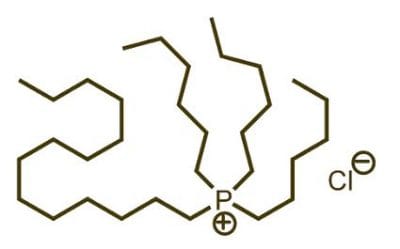
Trihexyltetradecylphosphonium Chloride
View ProductFrequently Asked Questions
Are ionic liquids truly 'green' and environmentally friendly?
The 'green' credentials of ionic liquids (ILs) depend on the specific cation-anion pair. While many ILs are favored for their low volatility and non-flammability, reducing air pollution and safety hazards, their overall environmental impact requires a full lifecycle assessment. Factors like toxicity, biodegradability, and the energy required for their synthesis must be considered. Researchers are actively designing 'greener' ILs from renewable sources with improved biodegradability.
What are the main challenges in scaling up ionic liquid synthesis for industrial use in India?
The primary challenges include the high cost of raw materials and synthesis procedures, ensuring high purity at a large scale, and developing efficient recycling processes to make them economically viable. For India, establishing a robust domestic supply chain for precursor chemicals and investing in scalable green synthesis routes are critical steps to overcome these hurdles.
How can I get funding for chemistry projects involving ionic liquids in India?
Several Indian government bodies support R&D in chemical sciences. You can apply for grants from the Department of Science and Technology (DST) through schemes like the Science and Engineering Research Board (SERB), the Council of Scientific & Industrial Research (CSIR), and the Department of Biotechnology (DBT). Many projects focusing on sustainable technologies and green chemistry receive special consideration. Collaborating with industry partners can also open up funding avenues.
Which ionic liquid properties are most important for battery applications?
For battery electrolytes, key ionic liquid properties include high ionic conductivity, a wide electrochemical window, low viscosity, high thermal stability, and non-flammability. The ability to fine-tune these properties by altering cation and anion structures makes ILs a promising alternative to conventional organic electrolytes in next-generation batteries, such as lithium-ion, sodium-ion, and solid-state batteries.
Where can I source high-purity ionic liquids for research in India?
High-purity ionic liquids for research and development can be sourced from specialized chemical suppliers like Hiyka, which offers a wide catalog of ILs for various applications. When sourcing, it's crucial to check for detailed specifications, purity levels (e.g., >99%), and water content, as these factors significantly impact experimental outcomes.