The Silent Threat in Our Water and a Nanotech Solution
Water, the elixir of life, is facing an unprecedented crisis in India. While access to water remains a challenge, its quality is an even more alarming concern. Industrial effluents, agricultural runoff, and improper waste disposal have contaminated our rivers and groundwater with a cocktail of toxic heavy metals like lead, arsenic, mercury, and cadmium. These contaminants are silent, invisible threats that lead to severe health issues, from neurological damage to cancer, posing a significant risk to millions of lives and the nation's environmental health.
Conventional water purification methods, such as reverse osmosis and activated carbon filtration, often struggle to remove these heavy metal ions effectively and sustainably. They can be energy-intensive, produce toxic brine, and have limited lifespans. This is where materials science offers a beacon of hope: graphene membranes. Graphene, a single layer of carbon atoms arranged in a honeycomb lattice, is a true "wonder material." It is the strongest, thinnest, and most conductive material known to man. When engineered into membranes, it presents a revolutionary approach to water purification.
For Indian researchers and industries, graphene-based filtration technology is not just an academic curiosity; it's a practical, scalable, and sustainable solution to a pressing national problem. These membranes offer a paradigm shift in how we approach heavy metal removal, promising higher efficiency, lower costs, and a greener footprint, aligning perfectly with national missions like 'Jal Jeevan' and 'Make in India'.
Why Graphene Membranes are a Game-Changer for Researchers
Unmatched Filtration Precision
Graphene membranes can be engineered with angstrom-level precision, creating pores that are just large enough for water molecules to pass through while physically blocking larger heavy metal ions. This results in exceptional selectivity and purification efficiency.
Superior Water Permeability
Being just one atom thick, these membranes offer extremely low resistance to water flow. This translates to high permeability, meaning more water can be purified faster and with significantly less energy compared to conventional membranes.
Robust and Long-Lasting
Despite its thinness, graphene is incredibly strong. When incorporated into composite structures, it creates durable membranes that can withstand high pressures and resist fouling (the clogging of pores), leading to a longer operational lifespan.
Tunable Surface Chemistry
The surface of graphene oxide (GO), a common precursor, is rich in functional groups. Researchers can modify this chemistry to enhance the membrane's affinity for specific heavy metals, creating a targeted and highly effective toxic metal extraction system.
Path to Cost-Effectiveness
With scalable production methods for graphene oxide now available, the cost of this advanced filtration technology is steadily decreasing. Its high efficiency and durability contribute to lower operational costs, making it an economically viable option for large-scale applications.
Foundation for Sustainable Treatment
Graphene membranes represent a cornerstone of sustainable water treatment. They reduce energy consumption, minimize the use of chemical treatments, and offer potential for regeneration and reuse, contributing to a circular economy model for water management.
Real-World Applications in the Indian Context
Industrial Wastewater Remediation
Industries such as tanneries, textiles, mining, and electronics manufacturing are major sources of heavy metal pollution. Graphene membranes can be deployed at the source to treat effluents, helping industries comply with stringent environmental regulations, recover valuable water for reuse, and protect community water sources. This is a critical step towards environmental safety.
Community and Municipal Water Purification
For municipal water supplies, especially in areas with known groundwater contamination (e.g., arsenic belts in West Bengal and Bihar), large-scale graphene-based filtration systems can provide a reliable barrier against heavy metals, ensuring safe drinking water for entire communities and reducing the public health burden.
Point-of-Use (PoU) Water Filters
The development of compact and affordable graphene filters for household use could empower individual families to secure their own access to clean water. These PoU systems would be a last line of defense, ensuring that the water from the tap is free from dissolved heavy metals and other impurities.
Advanced Desalination Pre-treatment
While desalination primarily targets salt, the removal of other contaminants like heavy metals is crucial. Graphene membranes can serve as a highly effective pre-treatment stage in desalination plants, protecting the more sensitive reverse osmosis membranes from fouling and damage, thereby improving the overall efficiency of producing clean water solutions.
Opportunities and Future Trends for Graphene in India
The push for advanced materials and clean technologies in India has never been stronger. Graphene membrane technology sits at the intersection of several national priorities. Government initiatives like the National Water Mission and Atal Mission for Rejuvenation and Urban Transformation (AMRUT) create a fertile ground for the adoption of innovative water purification technologies. There is immense opportunity for research institutions and private companies to collaborate on pilot projects, demonstrating the efficacy and economic viability of graphene membranes for heavy metal removal in real-world Indian conditions.
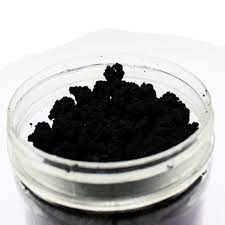
Furthermore, the 'Make in India' initiative encourages domestic production of high-tech components. Establishing local manufacturing of graphene oxide and the subsequent fabrication of membranes would not only address India's water challenges but also create a new, high-value industry, generating jobs and positioning India as a leader in sustainable water treatment technology. The focus is shifting from importing solutions to developing indigenous ones, and the R&D ecosystem, led by premier institutes, is ripe for this challenge. Sourcing high-quality raw materials like Graphene Oxide powder and suspensions locally from suppliers like Hiyka can accelerate this research-to-market pipeline, creating a self-reliant and robust framework for water security.
Frequently Asked Questions
Graphene membranes are ultra-thin films made from graphene or its derivatives, like graphene oxide (GO). These films have precisely controlled nanoscale pores that can block contaminants like heavy metal ions while allowing water molecules to pass through, making them highly effective for water purification.
Graphene membranes use a combination of physical size exclusion and chemical interaction. Their nano-pores are small enough to physically block hydrated metal ions. Additionally, the oxygen-containing functional groups on graphene oxide sheets can chelate or bind with heavy metal ions, effectively capturing them from the water.
Yes, when properly manufactured and integrated into a filtration system. The graphene material is stable and remains fixed within the filter cartridge. The purified water is free from the contaminants, and the graphene itself does not leach into the water, making it safe for consumption.
While graphene was initially expensive, advancements in manufacturing have significantly reduced the cost of its precursor, graphene oxide. The high efficiency and long lifespan of graphene membranes can make them a cost-effective solution in the long run compared to conventional methods that require frequent replacement or high energy consumption.
Indian researchers can source high-quality graphene oxide, graphite oxide, and other graphene-based materials from specialized suppliers like Hiyka, which provides advanced materials tailored for R&D and industrial applications, supporting the 'Make in India' initiative.
Related Products for Your Research


Ready to Revolutionize Your Water Treatment Research?
Join the forefront of materials science and contribute to solving one of India's most critical challenges. Explore our range of high-purity graphene products or contact our experts to discuss your specific research needs.
Get in Touch