
Pioneering a Greener Future: Graphene's Role in India's Industrial Growth
As India continues its rapid industrialization, the challenge of mitigating environmental impact has never been more critical. The emission of greenhouse gases, particularly carbon dioxide (CO2) from industrial flue gas, is a major concern, contributing to climate change and air pollution. Traditional carbon capture technologies, while functional, often come with high energy penalties and operational costs. This is where a revolutionary material enters the stage: graphene.
Graphene, a single layer of carbon atoms arranged in a honeycomb lattice, is hailed as a 'wonder material' for its extraordinary properties. For researchers and industrial professionals in India, the development of graphene membranes for carbon capture represents a monumental leap forward. These membranes offer a highly efficient, cost-effective, and scalable solution for emission control, directly addressing the nation's goals for sustainable development and greenhouse gas reduction.
Unlike conventional methods that rely on chemical absorption, graphene-based membranes utilize a physical separation process. Imagine a filter so precise it can distinguish between different gas molecules. By creating nano-sized pores in a graphene sheet, it's possible to allow smaller, harmless molecules like nitrogen to pass through while selectively capturing larger CO2 molecules. This process of graphene filtration is not only elegant in its simplicity but also vastly more energy-efficient, paving the way for a new era of sustainable industry in India and across the globe.
Advantages for the Indian Research Community
For scientists and engineers in Indian R&D, graphene membranes offer a fertile ground for innovation with tangible benefits:
-
Unprecedented Selectivity and Permeability
Graphene's atomic thinness allows for extremely high gas flux, while its tunable nanopores enable superior selectivity for CO2 over other gases, breaking the trade-off that limits traditional polymer membranes.
-
Lower Energy Consumption
The physical separation mechanism of graphene membranes avoids the energy-intensive regeneration steps required in amine scrubbing, significantly reducing the operational cost and carbon footprint of the capture process itself.
-
Chemical and Thermal Stability
Graphene is inherently robust and can withstand the harsh chemical and high-temperature environments found in industrial flue gas streams, ensuring longer membrane life and reliability.
-
Scalability and Modularity
Graphene membrane systems can be designed in a modular fashion, allowing for easy scaling to match the emission levels of different industrial plants, from small-scale factories to large power stations.
Key Industrial Applications for Emission Control
Power Generation
Retrofitting coal and gas-fired power plants with graphene membrane systems to capture CO2 at the source, significantly reducing the sector's carbon footprint and aiding in India's transition to cleaner energy.
Cement and Steel Manufacturing
These industries are major sources of industrial emissions. Graphene technology offers a viable path to decarbonize production processes, enhancing both sustainability and global competitiveness.
Petrochemical and Refining
Implementing graphene-based membranes for carbon capture in refining processes can lead to more efficient purification of gas streams and effective emission control, turning waste streams into potential revenue sources.
Natural Gas Purification
Separating CO2 from natural gas (gas sweetening) is a critical application where graphene membranes can outperform conventional methods, ensuring higher quality fuel and lower processing costs.
Biogas Upgrading
Enhancing the purity of biogas by removing CO2 to produce high-grade biomethane, a renewable energy source. This supports waste-to-energy initiatives and promotes a circular economy.
Air Purification and Life Support
Beyond large-scale industry, graphene filtration systems have potential in specialized air purification applications, including in enclosed environments like spacecraft or submarines, showcasing the versatility of the technology.
The Indian Landscape: Trends and Opportunities
India stands at a pivotal moment. With ambitious climate targets and the 'Make in India' initiative, there is a significant push for homegrown, advanced technologies. The development of graphene-based membranes for carbon capture in industrial emissions aligns perfectly with these national priorities. The market for carbon capture membranes is projected to grow substantially, and Indian researchers and companies are well-positioned to become leaders in this field.
Government funding through agencies like the Department of Science and Technology (DST) and collaborations between academic institutions (like the IITs) and industry are fostering a vibrant ecosystem for graphene technology. The focus is not just on research but on creating scalable manufacturing processes that can make this technology economically viable for widespread deployment. This creates immense opportunities for material scientists, chemical engineers, and environmental specialists to contribute to a technology that offers both economic and ecological benefits.
Furthermore, the global shift towards carbon pricing and stricter environmental regulations makes proactive adoption of effective emission control technologies a strategic advantage. Indian industries that invest in graphene filtration and similar advanced solutions will not only comply with future regulations but also enhance their brand reputation and operational efficiency, contributing directly to climate change mitigation efforts.
Frequently Asked Questions
Graphene membranes possess a unique combination of properties: they are the thinnest possible material, exceptionally strong, and can be engineered with precise nanopores. These pores can be tailored to be large enough to allow smaller gas molecules like nitrogen to pass through while selectively blocking larger molecules like CO2, enabling efficient gas separation at a low energy cost.
While still in the advanced stages of research and development, graphene-based carbon capture is rapidly approaching commercial viability. The key challenges being addressed are scalability and cost-effective manufacturing. With India's strong push for 'Make in India' and sustainable technologies, significant government and private sector investment is expected to accelerate the transition from lab to industrial-scale applications in the coming years.
Traditional methods, like amine scrubbing, are energy-intensive, require large operational footprints, and involve corrosive chemicals. Graphene membranes offer a more sustainable alternative with higher energy efficiency, a smaller physical footprint, modular scalability, and no need for chemical regeneration, leading to lower operational costs and a better environmental profile.
The primary raw material for graphene is graphite, a readily available form of carbon. Through processes like chemical vapor deposition (CVD) or liquid-phase exfoliation of graphite oxide, high-quality graphene can be produced. Materials like Graphite Oxide Powder and Graphene Oxide Suspensions are key precursors in creating these advanced membranes.
Related Materials for Graphene Research

Graphene Oxide Suspension: Advanced Material for Multifaceted Applications
View Product →
Graphite Oxide Powder: Advanced Material for Diverse Applications
View Product →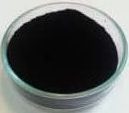
Graphene – Nanoplatelets, Dry (1-4nm)
View Product →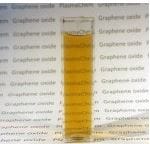
Graphene Oxide, aq. Dispersion
View Product →Ready to Advance Your Research?
Connect with us to explore high-quality graphene materials and discover how we can support your journey in developing next-generation environmental technologies.
Contact Us Today