The Nanotechnology Revolution in Orthopedics
The field of orthopedics is in a constant state of evolution, driven by the need for longer-lasting, more reliable, and biologically compatible implants. In India, with a growing aging population and an increase in lifestyle-related joint issues, the demand for advanced orthopedic solutions has never been higher. Researchers and medical professionals across the country are at the forefront of adopting and developing technologies that promise to overcome the limitations of traditional implants, such as aseptic loosening, poor integration with bone, and implant failure.
Enter the world of nanomaterials. At the nanoscale, materials exhibit unique properties that can be harnessed for groundbreaking biomedical applications. One of the most promising candidates in this domain is the **Multi-Walled Carbon Nanotube (MWCNT)**. An **MWCNT coating** on an **orthopedic implant** is not just a surface treatment; it's a fundamental enhancement that transforms the implant from a passive mechanical support into an active participant in the healing process.
This article delves into the science behind **MWCNT coatings**, exploring how this innovative **nanomaterial** is creating a new standard for **biocompatible coatings**. We will examine how it promotes superior **bone integration**, its diverse applications in medical devices, and the exciting opportunities this technology presents for the Indian R&D landscape. For any researcher working in **tissue engineering** or **biomedical application** development, understanding the role of **nanocoatings** like MWCNTs is no longer optional—it's essential.
Why Researchers Should Focus on MWCNT Coatings
For scientists and engineers in India's burgeoning medical research sector, focusing on **MWCNT coatings** offers a wealth of opportunities. This technology addresses several critical challenges in implantology. Here are the key benefits that make it a compelling area of study:
- Enhanced Osseointegration: The primary goal of any orthopedic implant is to achieve stable and rapid osseointegration—the direct structural and functional connection between living bone and the surface of a load-bearing artificial implant. The unique nanotopography of an **MWCNT coating** mimics the natural extracellular matrix, providing an ideal scaffold for bone cells (osteoblasts) to adhere, grow, and multiply. This leads to faster and stronger **bone integration**.
- Superior Mechanical Properties: MWCNTs are renowned for their extraordinary strength-to-weight ratio. When incorporated into a **biocompatible coating**, they reinforce the implant surface, improving its wear resistance and durability. This can significantly reduce the risk of delamination and particulate debris, common causes of implant failure.
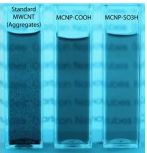
- Improved Biocompatibility: While pristine carbon nanotubes can raise biocompatibility concerns, functionalized MWCNTs (f-MWCNTs) are a different story. By modifying the surface with functional groups (like -COOH or -OH), researchers can dramatically improve their dispersion and interaction with biological systems, making the **implant surface** highly biocompatible and reducing inflammatory responses.
- Platform for Drug Delivery: The hollow structure and large surface area of MWCNTs make them excellent candidates for localized drug delivery. Antibiotics, anti-inflammatory agents, or growth factors can be loaded onto the **MWCNT coating** and released in a controlled manner at the implant site, preventing infection and accelerating healing.
- Conductivity for Bone Stimulation: Bone is a piezoelectric material, meaning it generates an electrical charge in response to mechanical stress, which in turn stimulates bone growth. The inherent electrical conductivity of MWCNTs can be harnessed to apply microcurrents to the implant site, further promoting and accelerating the bone regeneration process. This opens new frontiers in "smart" or "bioactive" implants.
Industry Applications: From Lab to Clinic
The potential of **multi-walled carbon nanotube coatings for orthopedic implants** is not merely theoretical. Research is actively translating into tangible applications across various medical devices.
Hip and Knee Replacements
Total joint arthroplasty is one of the most common orthopedic surgeries. Applying an **MWCNT coating** to the femoral stem of a hip implant or the tibial component of a knee implant can significantly enhance their stability and lifespan, reducing the need for costly and painful revision surgeries.
Dental Implants
In dentistry, the success of an implant hinges on rapid osseointegration in the jawbone. A **nanocoating** of MWCNTs on titanium dental screws can accelerate this process, allowing for earlier loading and providing a more robust foundation for prosthetic teeth. This is a huge area of interest for **biomedical application** in modern dentistry.
Spinal Fusion Cages
Spinal fusion procedures rely on cages to maintain vertebral spacing and promote bone growth. Coating these cages with a bioactive **MWCNT** layer encourages bone to grow through and around the device, leading to a more solid and reliable fusion. This is a critical advancement in **tissue engineering** for spinal repair.
Trauma Fixation Devices
Plates, screws, and nails used to fix fractures can benefit immensely from enhanced **bone integration**. An MWCNT-enhanced **implant surface** can reduce healing times and improve the strength of the bone-implant interface, which is particularly beneficial for patients with compromised healing capabilities.
The Indian Context: Opportunities and Future Trends
India is uniquely positioned to become a global leader in the research and manufacturing of advanced medical devices. The "Make in India" initiative, coupled with a vast pool of scientific talent and world-class research institutions, creates a fertile ground for innovation in **nanomaterial** science. The development of cost-effective **MWCNT coating** technologies could revolutionize the domestic **orthopedic implant** market, making high-performance implants more accessible to the Indian population.
A key trend is the integration of MWCNTs into composite coatings, often with hydroxyapatite (HA), the primary mineral component of bone. An MWCNT-HA composite combines the bioactivity of HA with the superior mechanical strength of carbon nanotubes, creating a synergistic **biocompatible coating** that is both strong and highly effective at promoting **bone integration**. Indian researchers are actively exploring various deposition techniques, such as plasma spraying and electrophoretic deposition, to create uniform and durable **nanocoatings** on complex implant geometries.
Furthermore, as the focus shifts towards personalized medicine, the ability to tailor the properties of an **implant surface** becomes paramount. Functionalized MWCNTs allow for this level of customization. By controlling the density, alignment, and functional groups on the nanotubes, it's possible to design coatings optimized for specific patient needs, such as those with osteoporosis or diabetes. This represents a significant commercial and clinical opportunity for Indian med-tech companies and research labs.
Frequently Asked Questions (FAQ)
MWCNT (Multi-Walled Carbon Nanotube) coatings are advanced nanomaterial layers applied to the surface of medical implants. These coatings are composed of multiple concentric tubes of graphene, providing exceptional mechanical strength, electrical conductivity, and a unique nanotopography that promotes bone cell growth and adhesion.
Biocompatible coatings are crucial for preventing implant rejection, reducing inflammation, and promoting successful integration with the surrounding bone tissue (osseointegration). They create a favorable interface between the artificial implant material (like titanium) and the body's biological environment, improving the implant's longevity and performance.
MWCNT coatings enhance bone integration primarily through their nanotopography. The nanoscale surface roughness mimics the natural extracellular matrix of bone, encouraging osteoblasts (bone-forming cells) to attach, proliferate, and differentiate more effectively. This leads to faster and stronger bone growth onto the implant surface.
The safety and biocompatibility of MWCNT coatings are areas of active research. When properly functionalized and integrated into a stable matrix (like hydroxyapatite), they have shown excellent biocompatibility. The key is to ensure that nanotubes are securely bonded to the implant surface to prevent the release of free-floating particles into the body. Research continues to optimize their long-term safety profiles.