The Dawn of a Material Revolution in India's 3D Printing Landscape
India's journey towards becoming a global manufacturing and research hub is being supercharged by transformative technologies, with 3D printing, or additive manufacturing, at the forefront. This technology is no longer just for rapid prototyping; it's a cornerstone of modern production. However, for Indian researchers and industries to truly unlock its potential, they must push beyond the limitations of standard printing materials. The challenge lies in creating objects that are not just structurally sound, but also functionally advanced.
This is where the science of the small makes a monumental impact. The integration of **nano carbon additives** into 3D printing filaments is a game-changer. By introducing materials like carbon black or carbon nanotubes at the nanoscale, we can fundamentally alter the properties of common polymers like PLA, ABS, and PETG. This process transforms them from simple plastics into high-performance composites. The most exciting outcome? The creation of **conductive filament**, a material that allows for the direct 3D printing of electronics, sensors, and electrostatically dissipative (ESD) components. This **filament enhancement** is not just an incremental improvement; it's a leap forward, enabling innovation across sectors vital to India's growth, from aerospace to consumer electronics and medical devices.
Key Benefits of Nano Carbon Filament Additives for Researchers
-
Enhanced Electrical Conductivity
The primary advantage is the ability to create electrically conductive pathways within a non-conductive polymer matrix. This opens the door for printing functional circuits, EMI/RFI shielding, and ESD-safe components, crucial for India's burgeoning electronics manufacturing sector.
-
Superior Material Strength & Durability
Nano carbon additives significantly improve the tensile strength, stiffness, and layer adhesion of 3D printed parts. This leads to more robust and durable components that can withstand mechanical stress, moving beyond prototypes to functional, end-use parts.
-
Improved Thermal Properties
The inclusion of nano carbon enhances thermal stability and heat dissipation. This is critical for parts used in high-temperature environments or for electronic enclosures that need to efficiently manage heat generated by internal components.
-
Enhanced Print Quality and Precision
The presence of nano additives can lead to better flow characteristics and reduced warping during the printing process. This results in sharper details, smoother surfaces, and higher dimensional accuracy, which is vital for complex and intricate designs.
Industry Applications Driving Indian Innovation
Electronics & IoT Devices
The ability to print using **conductive filament** is a paradigm shift for electronics prototyping and manufacturing. Indian startups and R&D labs can now rapidly create custom-shaped antennas, embedded sensors, wearable technology, and ESD-safe enclosures for sensitive components, drastically shortening development cycles.
Aerospace & Defence
In a sector where weight and performance are paramount, **nano carbon** enhanced materials offer a significant advantage. These composites are used to print lightweight yet strong non-structural components, jigs, fixtures, and parts requiring EMI/RFI shielding, supporting the 'Make in India' initiative in defence and aerospace.
Automotive Industry
Indian automotive companies can leverage the improved **material strength** for creating durable jigs, fixtures, and manufacturing aids. Furthermore, the ability to prototype functional parts with conductive properties allows for testing of integrated electronic components and custom housings within vehicles.
Medical and Healthcare
The application of **nano additive** materials in healthcare is vast. Researchers can develop customized prosthetics with integrated sensors, create precise anatomical models for surgical planning, and manufacture biocompatible (with appropriate base polymers) devices with enhanced mechanical properties for better patient outcomes.
Opportunities and Future Trends: The Indian Context
The landscape for advanced **3D printing** in India is ripe with opportunity. The national push towards self-reliance through initiatives like 'Make in India' and 'Aatmanirbhar Bharat' creates a fertile ground for domestic innovation in material science. Local universities, such as the IITs and NITs, are becoming epicenters for research into **nano additives** and their application in polymers. This academic push is crucial for developing cost-effective solutions tailored to the Indian market.
We are witnessing a rise in Indian companies specializing in filament manufacturing. For these businesses, incorporating **nano carbon black for 3D printing filaments** is a clear pathway to differentiate their products and compete on a global scale. By offering high-performance materials like **conductive filament**, they can cater to the growing demand from local industries. The key trend is the democratization of advanced manufacturing; what was once the domain of high-cost industrial machines is now becoming accessible to a wider range of engineers, designers, and entrepreneurs across the country, fueling grassroots innovation.
Frequently Asked Questions (FAQ)
Nano carbon black is a form of carbon with particles engineered at the nanoscale (typically under 100 nanometers). When used as a filament additive in 3D printing, it disperses within a base polymer (like PLA, ABS, or PETG) to impart specific properties, most notably electrical conductivity and enhanced mechanical strength, turning standard plastics into high-performance materials.
Conductivity is achieved through a principle called percolation. When a sufficient concentration of nano carbon particles is mixed into the polymer, they form a continuous, interconnected network. This network allows electrons to flow through the material, transforming the normally insulating plastic into a conductive filament suitable for printing electronic components.
The required concentration, or loading level, depends on the type of nano carbon, the base polymer, and the desired level of conductivity. Generally, the percolation threshold (the point at which conductivity sharply increases) can be reached with loading levels anywhere from 3% to 15% by weight. Lower percentages are often possible with high-structure carbon blacks.
Handling nano additives requires appropriate safety measures. As with any fine powder, inhalation should be avoided. It is crucial for researchers and manufacturers in India to use personal protective equipment (PPE) such as masks (N95 or better), gloves, and safety glasses, and to work in well-ventilated areas or under a fume hood to minimize exposure.
Many conductive filaments are designed to be compatible with standard Fused Deposition Modeling (FDM) printers. However, because carbon additives can be abrasive, they may cause accelerated wear on a standard brass nozzle. It is highly recommended to use a hardened steel or ruby-tipped nozzle to ensure longevity and consistent print quality.
Recommended Products for Your Research

Conductive Carbon Black
View Product →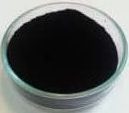
Carbon Black nanopowder (50g)
View Product →
Carbon Mesoporous Materials
View Product →
Carbon Black Powder
View Product →Ready to Innovate?
Explore our range of high-performance nano carbon additives and conductive filaments to take your projects to the next level. Empower your research and manufacturing with materials of the future.
Browse Carbon Black Products