
The Unseen Challenge: Taming the Heat in Modern Electronics
In today's fast-paced digital world, from the smartphones in our pockets to the powerful servers driving India's burgeoning tech industry, the demand for smaller, faster, and more powerful electronic devices is relentless. But this progress comes with a hidden enemy: heat. Excessive heat is the kryptonite of electronic components, leading to performance throttling, reduced lifespan, and catastrophic failures. Effective electronics thermal management is no longer a luxury; it's a critical necessity.
This is where Thermal Interface Materials (TIMs) play a pivotal role. These materials, often in the form of pastes, pads, or adhesives, are designed to fill the microscopic air gaps between a heat-generating component (like a processor) and a heat sink. By displacing air—a poor conductor of heat—TIMs create an efficient bridge for heat dissipation. However, traditional TIMs are reaching their limits. The solution? A revolutionary additive that is transforming the field: Nano Carbon Black.
For Indian researchers, engineers, and manufacturers, understanding and leveraging nano carbon black is a significant opportunity. It represents a leap forward in creating next-generation cooling solutions that are not only more effective but also potentially more cost-efficient, aligning perfectly with the 'Make in India' initiative and the nation's push towards technological self-reliance.
Why Nano Carbon Black is a Game-Changer for Researchers and Industry
The integration of nano carbon black into TIMs isn't just an incremental improvement; it's a paradigm shift. This nano thermal additive offers a unique combination of properties that directly address the core challenges of electronics cooling. Here’s why it’s gaining traction in R&D labs and production lines across India:
-
Exceptional Thermal Conductivity
At the nanoscale, carbon black forms intricate, interconnected networks within the TIM matrix. These networks act as superhighways for heat, dramatically increasing the material's ability to transfer thermal energy away from sensitive components. This leads to a significant boost in overall thermal conductivity.
-
Low Filler Loading, High Performance
Unlike traditional ceramic fillers that require high concentrations (which can make the TIM brittle and heavy), nano carbon black achieves superior results at much lower loading percentages. This preserves the desirable mechanical properties of the base polymer, such as flexibility and adhesion, making it a more versatile electronic enhancer.
-
Enhanced Stability and Reliability
TIMs enhanced with nano carbon black exhibit excellent long-term stability. They resist the pump-out effect (where the material is squeezed out from between the components due to thermal cycling) and maintain their thermal performance over thousands of hours of operation, a critical factor for enterprise and industrial electronics.
-
Cost-Effectiveness at Scale
While advanced nanomaterials can be perceived as expensive, the low loading requirements and superior performance of carbon black thermal additives can lead to a lower total cost of ownership. Better cooling reduces failure rates, warranty claims, and the need for bulky, expensive mechanical cooling solutions like larger fans or heat sinks.
Industry Applications: Powering India's Tech Ecosystem
The practical applications of nano carbon black in TIMs span across nearly every sector of the electronics industry. For India, a global hub for manufacturing and innovation, these applications are particularly relevant.
Consumer Electronics & Mobile Devices
In the ultra-competitive smartphone and laptop market, every millimeter of space counts. TIMs with nano carbon black enable sleeker designs by providing efficient heat dissipation in compact spaces, allowing high-performance processors to run cooler without bulky fans.
Automotive and Electric Vehicles (EVs)
From infotainment systems to the complex battery management systems (BMS) in EVs, thermal management is crucial for safety and longevity. Nano-enhanced TIMs ensure reliable cooling for power inverters, charging units, and battery packs, a critical area for India's growing EV market.
Data Centers & Telecommunications
As India's digital infrastructure expands, data centers and 5G base stations are processing unprecedented amounts of data. This generates immense heat. High-performance TIMs are essential for cooling servers, switches, and power supplies, ensuring uptime and energy efficiency.
LED Lighting and Power Electronics
The efficiency and lifespan of high-power LEDs are directly tied to their operating temperature. A superior thermal interface using nano carbon black ensures that heat is drawn away from the LED chip, preventing color shift and premature failure, supporting India's push for energy-efficient lighting.
Opportunities & Future Trends in India
The market for advanced thermal management solutions in India is on a steep upward trajectory. Several factors are creating a fertile ground for research and commercialization of nano carbon black for thermal interface materials in electronics. Indian researchers and businesses that focus on this nano cooling additive can gain a significant competitive edge.
The 'Make in India' and 'Production Linked Incentive' (PLI) schemes are actively encouraging domestic manufacturing of electronics. This localization drive necessitates a robust local supply chain for high-performance components, including TIMs. Developing expertise in formulating TIMs with nano carbon black positions Indian companies to meet this growing domestic demand, reducing reliance on imports.
Furthermore, the continuous miniaturization of devices combined with the rollout of 5G and the growth of IoT means that the problem of heat density will only become more acute. This guarantees a sustained demand for innovative electronics cooling solutions. Research into optimizing dispersion techniques, functionalizing nano carbon surfaces, and creating hybrid TIMs that blend nano carbon with other materials will be key areas of exploration for the Indian R&D community.
Frequently Asked Questions (FAQ)
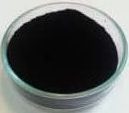
Nano Carbon Black consists of extremely fine particles of carbon, typically in the range of 10 to 100 nanometers. Its unique properties, including high surface area and excellent thermal and electrical conductivity, make it a powerful additive in various industrial applications, especially in thermal interface materials (TIMs).
When incorporated into a polymer matrix (like silicone or epoxy), nano carbon black particles form conductive pathways or networks. These networks efficiently transfer heat from a hot component (like a CPU) to a heat sink, significantly boosting the material's overall thermal conductivity and improving heat dissipation.
Yes, it is. This is a critical consideration in electronics. While its conductivity is key for thermal performance, the formulation of the TIM must be carefully engineered to prevent electrical short-circuiting. The concentration and dispersion of the nano carbon black are controlled to optimize thermal conductivity while maintaining electrical insulation where required.
Compared to traditional fillers like ceramic powders, nano carbon black offers higher thermal conductivity at lower loading levels. This results in lighter, more flexible, and often more cost-effective thermal interface materials. Its nanostructure also allows it to fill microscopic gaps more effectively, ensuring better surface contact and heat transfer.
Explore Related Materials


Ready to Advance Your Research?
Connect with us to source high-purity nano carbon black and other advanced materials for your R&D and manufacturing needs in India.
Contact Us