Introduction: The Unseen Revolution in Electronic Connections
The electronics industry is in a constant state of evolution, driven by the relentless pursuit of smaller, faster, and more powerful devices. From flexible smartphones to sophisticated medical implants, this miniaturization trend presents significant challenges, particularly in how components are interconnected. Traditional soldering, with its high temperatures and rigid joints, is often unsuitable for delicate, flexible substrates or heat-sensitive components. This is where conductive adhesives emerge as a revolutionary solution, and at the heart of their enhanced performance lies a remarkable material: nano carbon black.
For researchers and professionals in India, a nation rapidly ascending as a global electronics manufacturing hub, understanding and leveraging such advanced materials is not just an option—it's a necessity. The "Make in India" initiative and the Production Linked Incentive (PLI) schemes for electronics have created a fertile ground for innovation. A deep dive into nano carbon black as a pivotal electronics additive offers a pathway to developing next-generation products that are more reliable, cost-effective, and versatile.
This blog explores the multifaceted role of nano carbon black for conductive adhesives in electronics. We will dissect its properties, uncover its benefits over traditional fillers, and showcase its diverse applications. For the Indian R&D community, this is a guide to harnessing an adhesive enhancer that promises to redefine the standards of electronic conductivity and conductive bonding.
Why Researchers are Turning to Nano Carbon Black: Key Benefits
The choice of a conductive filler is critical to the performance of an adhesive. While silver flakes have long been the industry standard, nano carbon black presents a compelling set of advantages, especially for researchers aiming for innovation and cost-efficiency.
The Science of Superior Connectivity
The magic of nano carbon black lies in a principle called percolation theory. At the nanoscale, these carbon particles form intricate, chain-like structures within the adhesive's polymer matrix. When a sufficient concentration is reached (the "percolation threshold"), these chains connect to form a continuous network, allowing electrons to flow freely through the material. This process transforms an insulating adhesive into a reliable conductor.
Here are the tangible benefits for researchers and manufacturers:
- Exceptional Electronic Conductivity at Low Loadings: Due to their high aspect ratio and surface area, nano carbon black particles achieve the percolation threshold at much lower concentrations compared to larger, conventional carbon black or other fillers. This reduces the overall cost and preserves the adhesive's mechanical properties.
- Enhanced Mechanical Strength and Flexibility: Unlike brittle metallic fillers, nano carbon black reinforces the polymer matrix. This results in a conductive adhesive with superior bond strength, flexibility, and resistance to cracking under thermal or physical stress—a critical feature for flexible electronics and wearables.
- Cost-Effectiveness: Nano carbon black is significantly more affordable than silver, the most common alternative. This cost advantage allows Indian manufacturers to produce high-performance electronics at a more competitive price point, democratizing access to advanced technology.
- Superior Thermal and Chemical Stability: Carbon is inherently stable. Adhesives formulated with nano carbon black exhibit excellent performance across a wide range of temperatures and are resistant to chemical degradation, ensuring long-term reliability in harsh operating environments.
- No Electromigration: A significant drawback of silver-based adhesives is electromigration, where silver ions move under an electric field, potentially causing short circuits. Carbon is not susceptible to this phenomenon, making carbon black adhesive a more reliable choice for high-density, long-life applications.
For the Indian electronics sector, these benefits translate directly into a competitive edge: the ability to design and manufacture durable, flexible, and affordable electronic devices for both domestic and global markets.
From Lab to Industry: Real-World Applications in India
The theoretical advantages of nano carbon black conductive adhesive are being realized across a spectrum of industries. Its versatility makes it a go-to solution for challenges where traditional methods fall short. Here’s a look at key application areas relevant to India's industrial landscape.
Flexible Electronics and Wearables
The booming market for wearables—smartwatches, fitness trackers, and medical sensors—relies on components mounted on flexible substrates. Nano carbon black adhesives provide a durable, electrically stable bond that can withstand bending and stretching, making them perfect for connecting circuits in these innovative products.
PCB Assembly and Repair
In high-density Printed Circuit Boards (PCBs), especially those with heat-sensitive components, soldering can cause damage. Conductive adhesives offer a low-temperature curing alternative for electronic bonding. They are also invaluable for field repairs, allowing technicians to fix broken traces or attach components without specialized soldering equipment.
EMI/RFI Shielding
Electromagnetic Interference (EMI) and Radio Frequency Interference (RFI) can degrade the performance of sensitive electronics. Coatings and gaskets formulated with nano carbon black can be applied to electronic enclosures, creating a conductive layer that absorbs and dissipates unwanted interference, crucial for telecommunications and defense electronics.
Die Attach and Semiconductor Packaging
In semiconductor manufacturing, die-attach adhesives are used to mount silicon chips onto substrates. Using a conductive adhesive with nano carbon black provides both a strong mechanical bond and an efficient electrical connection, while also helping to dissipate heat from the chip—a critical aspect of thermal management.
Opportunities and Trends: The Indian Perspective
The convergence of advanced materials science and national policy is creating unprecedented opportunities in India. The application of nano electronics materials like nano carbon black is at the forefront of this shift.
Tapping into the 'Make in India' Initiative
The Indian government's focus on self-reliance in electronics manufacturing provides a massive impetus for R&D in materials like nano carbon black for conductive adhesives. Local development and production of these adhesives can significantly reduce import dependency on components from countries like China and Taiwan. Researchers at institutions like the IITs, IISc, and CSIR labs are actively exploring novel formulations of nano adhesive materials to cater to the specific needs of domestic industries, from consumer electronics to strategic sectors like aerospace and defense.
The Rise of Printed and Flexible Electronics
A key trend shaping the future is the move towards printed electronics. Imagine circuits printed onto plastic films or even textiles. This requires inks and adhesives that are not only conductive but also flexible and durable. Carbon black adhesive formulations are central to this technology. For Indian entrepreneurs and researchers, this opens up avenues for creating low-cost diagnostic sensors, smart packaging, and large-area flexible lighting and displays. The inherent cost-effectiveness of nano carbon black makes it the ideal candidate to drive mass adoption of these futuristic technologies.
Sustainability and Green Manufacturing
Modern manufacturing is increasingly judged by its environmental footprint. Lead-based solders are hazardous, and their use is restricted globally. Silver, while less toxic, involves energy-intensive mining and refining processes. Conductive bonding using carbon-based adhesives represents a greener alternative. The manufacturing of nano carbon black can be optimized for lower energy consumption, and the final adhesive product is free from heavy metals, aligning with global sustainability goals and creating export opportunities for Indian manufacturers in environmentally-conscious markets.
Frequently Asked Questions (FAQ)
Navigating the world of advanced materials can bring up questions. Here are some common queries about nano carbon black in conductive adhesives.
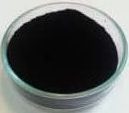
Nano carbon black is a high-purity form of carbon black with particle sizes in the nanometer range (typically 10-100 nm). Its unique properties, including extremely high surface area and excellent electrical conductivity, make it a superior electronics additive for applications like creating a conductive adhesive.
It creates a robust, percolating conductive network within the adhesive matrix even at low concentrations. This enhances electronic conductivity, improves mechanical strength and flexibility, and provides excellent thermal stability, making it a superior adhesive enhancer for electronic bonding.
While silver offers higher conductivity, it is significantly more expensive and prone to electromigration. Nano carbon black provides a cost-effective alternative with stable, reliable conductivity, excellent mechanical properties, and resistance to environmental factors. For many applications where ultra-high conductivity isn't the only priority, it is the better overall choice for creating a reliable carbon black adhesive.
In India, key applications for conductive bonding include flexible electronics (wearables), printed circuit board (PCB) assembly and repair, EMI/RFI shielding in telecommunications equipment, and die-attach applications in semiconductor packaging, aligning with the 'Make in India' initiative and the push towards advanced nano electronics.
Conclusion: The Future of Bonding is Nano
The journey into the world of nano carbon black for conductive adhesives reveals a material poised to solve some of the most pressing challenges in modern electronics. Its unique combination of conductivity, mechanical robustness, and cost-effectiveness makes it an indispensable tool for Indian researchers, engineers, and manufacturers. As India continues to build its capabilities in high-tech manufacturing, embracing such advanced materials will be the key to unlocking innovation and achieving global leadership.
The path forward involves continued research into optimizing formulations, exploring new polymer matrices, and scaling up production to meet industrial demand. For the bright minds in India's R&D ecosystem, the age of nano adhesive technology is here, and it promises a future that is seamlessly and reliably connected.