
Powering the Future: Nano Carbon Black in India's Solar Revolution
India's commitment to renewable energy is not just a policy; it's a national mission. With one of the world's most ambitious solar energy programs, the country is on a relentless quest for technologies that can make solar power more efficient, affordable, and durable. For researchers and professionals in India's burgeoning materials science and solar sectors, this presents a landscape ripe with opportunity. Enter nano carbon black, a nanomaterial poised to redefine the capabilities of photovoltaic (PV) solar panels.
At its core, the challenge in solar technology is to capture as much sunlight as possible and convert it into electricity with minimal loss. This is where the concept of a conductive coating becomes critical. These ultra-thin layers applied to solar panel components are designed to protect the sensitive parts from environmental degradation while ensuring that the electrical charge generated by solar cells is transported efficiently. The inclusion of nano carbon black as a coating additive is a game-changer. Its unique nanoscale properties dramatically enhance the electrical conductivity and mechanical strength of these coatings, directly impacting the performance and lifespan of the photovoltaic panel.
This article delves into the transformative role of nano carbon black for conductive coatings in photovoltaic solar panels. We will explore the science behind this innovative solar material, its tangible benefits for Indian R&D, emerging industry applications, and the promising future it holds for enhancing panel conductivity and driving India's green energy ambitions forward.
Key Benefits for Indian Researchers & Innovators
For the scientific community in India, working with advanced materials like nano carbon black opens up new frontiers in research and development. The tangible benefits extend from the laboratory to large-scale industrial applications.
- Enhanced Electrical Conductivity: The primary advantage is the significant boost in conductivity. Nano carbon black forms a percolating network within the coating matrix, creating efficient pathways for electron flow. This reduces internal resistance, a major source of energy loss in PV panels.
- Superior UV Resistance: India's high solar irradiance can degrade polymers used in solar panels. Nano carbon black is an excellent UV absorber, protecting the underlying layers from photodegradation and extending the panel's operational life. This nano coating enhancement is vital for long-term performance.
- Improved Mechanical Strength: As a reinforcing additive, it improves the toughness, flexibility, and abrasion resistance of coatings. This makes solar panels more resilient to physical stress during transportation, installation, and harsh weather conditions like hailstorms.
- Cost-Effective Performance Boost: Compared to other conductive additives like silver nanoparticles or carbon nanotubes, nano carbon black offers a highly attractive cost-to-performance ratio, aligning perfectly with India's goal of reducing the overall cost of solar energy.
- Versatility in Formulation: Researchers can fine-tune the properties of the conductive coating by varying the concentration, dispersion, and type of nano carbon black, allowing for customized solutions for different types of PV cells (e.g., silicon, perovskite, organic PV).
- Fostering Indigenous Innovation: Mastering the application of this solar material empowers Indian companies and research institutions to develop proprietary, high-performance coating formulations, contributing to the 'Make in India' initiative and creating valuable intellectual property.
From Lab to Grid: Industry Applications
The versatility of nano carbon black extends across various components of a photovoltaic system. Here are some key applications where this coating additive is making a significant impact.
Conductive Backsheets
The backsheet is the outermost protective layer of a PV panel. Incorporating nano carbon black into the backsheet material not only imparts UV protection but also provides electrical conductivity. This helps in grounding the panel safely and can improve overall system performance by creating a more uniform electrical field, a key aspect of carbon black solar technology.
Encapsulant Materials
Encapsulants, typically made of EVA (ethylene vinyl acetate), seal the solar cells from moisture and physical damage. Adding nano carbon black to these encapsulants can enhance their thermal conductivity, helping to dissipate heat more effectively. Lower operating temperatures lead to higher conversion efficiency and a longer lifespan for the photovoltaic panel.
Anti-Static & EMI Shielding Coatings
In large solar farms, static buildup and electromagnetic interference (EMI) can be a concern. A conductive coating with nano carbon black on panel frames or junction boxes can provide effective anti-static properties and EMI shielding, ensuring reliable operation of the entire solar array. This is a crucial coating enhancement for grid-scale projects.
Conductive Adhesives and Sealants
Within the module assembly, conductive adhesives are used to bond different components while maintaining electrical continuity. Nano carbon black is a preferred filler for these adhesives, providing a robust, reliable, and cost-effective conductive bond that enhances panel conductivity and structural integrity.
The Indian Context: Opportunities and Future Trends
The push for domestic manufacturing under the Production Linked Incentive (PLI) scheme for high-efficiency solar modules creates an immense opportunity for materials like nano carbon black. Indian manufacturers are actively seeking ways to differentiate their products and improve cell-to-module power conversion ratios. Developing advanced conductive coating formulations is a direct pathway to achieving this. The trend is shifting from merely assembling panels to deep-tech manufacturing of components like backsheets, encapsulants, and specialized coatings.
Furthermore, the rise of next-generation PV technologies, such as perovskite and bifacial solar cells, presents new challenges and opportunities. These technologies often require more sophisticated material solutions to ensure stability and efficiency. The unique properties of nano carbon black make it a prime candidate for R&D in these emerging areas. Indian research labs and universities can lead the charge in creating novel composites and nano solar solutions, patenting their innovations, and collaborating with industry to bring them to market. The synergy between academic research and industrial application of this versatile coating additive will be a cornerstone of India's future solar success.
Frequently Asked Questions
Nano carbon black is a form of carbon black with particle sizes in the nanometer range (typically below 100 nm). Its extremely small particle size and high surface area-to-volume ratio give it unique properties, such as high electrical conductivity, UV resistance, and reinforcement capabilities, making it a valuable additive in advanced materials like conductive coatings.
In photovoltaic panels, nano carbon black is used as a conductive additive in coatings and encapsulants. It enhances electrical conductivity, allowing for more efficient collection and transport of electrons generated by solar cells. This reduces resistive losses and improves the overall power output and long-term stability of the solar panel.
Like any nanomaterial, the environmental impact of nano carbon black is a subject of ongoing research. When encapsulated within a polymer matrix (like in a coating), it is stable and poses minimal risk. Manufacturers follow strict safety protocols for handling nano carbon black in its powdered form to prevent inhalation and environmental release. Its use in solar panels contributes positively to the environment by boosting clean energy generation.
With India's ambitious renewable energy targets and the 'Make in India' initiative, there is a strong push for domestic manufacturing of high-efficiency solar components. Nano carbon black offers a cost-effective way to improve solar panel performance. For Indian researchers and industries, it represents a key material for innovation, developing next-generation solar technologies, and reducing reliance on imported components.
Related Products for Your Research


Ready to Innovate?
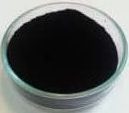
Advance your research and development with high-purity nano carbon black and other advanced materials. Explore our product range or contact our experts for custom solutions.
Explore Carbon Black ProductsContact Us for More Information
Have a specific question or a unique research requirement? Our team of material science experts is here to help. Fill out the form below, and we'll get in touch with you shortly.