The Dawn of a New Material Age in Aerospace
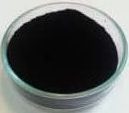
The aerospace industry is in a constant state of evolution, driven by the relentless pursuit of lighter, stronger, and more functional materials. For Indian researchers and professionals in the R&D and industrial sectors, this evolution presents both a challenge and a monumental opportunity. At the forefront of this material revolution is a humble yet powerful substance: nano carbon black. This isn't your standard carbon black; it's a highly engineered nano aerospace additive with the power to transform insulating polymers into advanced conductive polymer composites.
The integration of nano carbon black for conductive polymer composites in aerospace is more than just an incremental improvement. It represents a paradigm shift. Traditional aerospace materials, while strong, often require additional, heavy components for tasks like electrical grounding, static dissipation, and shielding against electromagnetic interference (EMI). By embedding nano carbon black directly into the polymer matrix of an aerospace composite, we can build these properties directly into the structural components of an aircraft. This results in significant weight reduction, simplified design, and enhanced safety and performance—key objectives for India's burgeoning aerospace and defense manufacturing ecosystem.
This article delves into the transformative potential of this nano aerospace material. We will explore its fundamental properties, the immense benefits it offers to the research community, its practical applications, and the specific trends and opportunities emerging within the Indian landscape. For the scientist in the lab and the engineer on the factory floor, understanding this polymer enhancer is no longer optional; it's essential for staying at the cutting edge of aerospace innovation.
Why Researchers are Turning to Nano Carbon Black
For the Indian research community, nano carbon black is not just a material; it's a versatile platform for innovation. Its adoption opens up new avenues of study and provides tangible advantages in the development of next-generation aerospace composites.
Multifunctional Material Design
Researchers can move beyond single-purpose materials. With nano carbon black, a single composite can provide structural integrity, electrical conductivity, and thermal management. This convergence simplifies design and opens up research into creating truly "smart" materials that can sense and respond to their environment.
Enhanced Electrical Performance (Aerospace Conductivity)
It provides a cost-effective and lightweight solution for achieving desired levels of aerospace conductivity. Researchers can precisely tune the electrical resistivity of composites by varying the concentration of the nano aerospace additive, enabling tailored solutions for everything from static discharge wicks to high-frequency EMI shielding panels.
Superior Mechanical Properties
Beyond conductivity, nano carbon black acts as a potent polymer strengthener. Its high surface area and interaction with the polymer matrix can significantly improve tensile strength, modulus, and fatigue resistance of the host material. This allows for the creation of more durable and resilient carbon black composite parts.
Pathways to Novel Research & IP
The challenges associated with nanoparticle dispersion, surface functionalization, and polymer-filler interaction are fertile ground for new research. Solving these challenges can lead to valuable intellectual property (IP), patents, and publications, establishing Indian institutions as leaders in the field of advanced nano aerospace material science.
From Lab to Lift-Off: Industry Applications
The theoretical benefits of conductive polymer composites translate into tangible, high-impact applications across the aerospace industry. Here are key areas where nano carbon black is making a difference:
EMI/RFI Shielding
Modern aircraft are packed with sensitive electronics (avionics). Shielding these systems from electromagnetic and radio-frequency interference is critical for safety. Composites infused with nano carbon black provide lightweight, effective shielding that can be integrated directly into avionics enclosures and fuselage panels, replacing heavier metallic meshes.
Electrostatic Discharge (ESD) Management
As an aircraft moves through the air, friction builds up a significant static charge. This charge must be safely dissipated to prevent sparks that could ignite fuel vapors or damage electronics. Conductive polymer components, such as fuel system parts and leading edges, ensure controlled dissipation of this static electricity, greatly enhancing operational safety.
Lightweight Conductive Wiring & Sensors
There is ongoing research into using conductive composites as a replacement for traditional copper wiring in some low-power applications, offering massive weight savings. Furthermore, the piezoresistive properties of carbon black composite materials allow them to be used as strain sensors for structural health monitoring (SHM), enabling real-time tracking of an aircraft's structural integrity.
Lightning Strike Protection (LSP)
While traditional LSP systems rely on copper mesh, advanced aerospace composites with high aerospace conductivity are being developed to help dissipate the immense energy from a lightning strike across the aircraft's skin. This is a critical area of development for next-generation composite-heavy aircraft, and nano carbon black is a key enabling aerospace additive.
The Indian Landscape: Trends and Opportunities
The adoption of advanced materials like nano carbon black is not happening in a vacuum. It aligns perfectly with India's strategic goals and industrial ambitions, creating a fertile ground for growth and innovation.
The "Make in India" initiative and the push for 'Aatmanirbhar Bharat' in defense and aerospace are powerful drivers. The government is actively encouraging domestic R&D and manufacturing of high-performance materials. For Indian companies and research labs, developing expertise in nano carbon black for conductive polymer composites in aerospace is a direct contribution to this national mission. It reduces reliance on imported specialty materials and builds sovereign capability in a critical technology sector.
Organizations like ISRO, DRDO, HAL, and a growing number of private aerospace startups are demanding materials that offer superior performance-to-weight ratios. As launch costs decrease and the satellite and commercial aviation markets expand, the need for lightweight, multifunctional composites becomes even more acute. A carbon black composite that serves as both a structural element and a conductive shield is incredibly valuable. This demand creates a direct market for Indian material scientists and manufacturers who can master the application of this versatile polymer enhancer.
The future lies in optimizing the synergy between the nano aerospace additive and the polymer matrix. Indian researchers have the opportunity to lead in developing novel dispersion methods, exploring hybrid fillers (e.g., combining carbon nanotubes with nano carbon black), and creating advanced computational models to predict the behavior of these complex materials. This focus on deep science will be the key to unlocking the full potential of this remarkable nano aerospace material and securing India's place as a global leader in aerospace technology.
Frequently Asked Questions
Nano carbon black consists of extremely fine carbon particles with unique properties. In aerospace, it's a critical nano aerospace additive used to create conductive polymer composites. These composites are vital for applications like EMI shielding, static dissipation, and creating lightweight, strong, and conductive aircraft components, thereby enhancing safety and performance.
When dispersed within a polymer matrix, nano carbon black particles form a conductive network. This network allows electricity to flow through the normally insulating polymer, transforming it into a conductive polymer. This property is crucial for managing electrostatic discharge (ESD) and shielding sensitive electronics from electromagnetic interference (EMI) in aircraft, a key aspect of aerospace conductivity.
No, while its primary role in this context is enhancing aerospace conductivity, nano carbon black also acts as a powerful polymer strengthener and enhancer. It improves the mechanical properties of composites, such as tensile strength and durability, and enhances resistance to UV degradation, making it a multifunctional nano aerospace material.
The main challenge is achieving uniform dispersion of the nanoparticles within the polymer matrix. Agglomeration (clumping) can lead to inconsistent electrical and mechanical properties. Indian researchers are actively working on advanced dispersion techniques and surface modifications to overcome this, ensuring the reliability of the final carbon black composite.