Introduction: The Unseen Powerhouse in Modern Batteries
In the relentless pursuit of more efficient and powerful energy storage, the scientific community is constantly exploring novel materials that can push the boundaries of current technology. Among these, nano carbon black has emerged as a silent yet formidable player, particularly in the realm of lithium-ion batteries. For researchers and industry professionals across India, a nation at the cusp of an electric vehicle (EV) and electronics manufacturing revolution, understanding the role of this advanced material is not just academic—it's a strategic necessity.
At its core, a lithium-ion battery's performance hinges on the seamless flow of ions and electrons. The electrodes—anode and cathode—are complex composites of active materials, binders, and conductive additives. While the active material (like lithium cobalt oxide or graphite) stores the energy, the conductive additive creates the electronic pathways necessary for charging and discharging. This is where nano carbon black, a specialized electrode additive, makes its transformative impact.
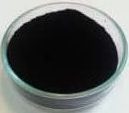
Unlike conventional carbon black, the 'nano' prefix signifies particles engineered at an incredibly small scale, typically below 100 nanometers. This minute size gives rise to an exceptionally high surface-area-to-volume ratio and unique structural properties. When integrated into battery electrodes, this nano carbon black powder forms a highly efficient, three-dimensional conductive network. This network acts like a superhighway for electrons, drastically improving the conductivity enhancement of the entire electrode structure. The result is a battery that can be charged faster, deliver more power, and last longer. As India's National Mission on Transformative Mobility and Battery Storage gains momentum, materials that promise such significant performance boosts are moving from the laboratory to the forefront of industrial innovation.
Key Benefits for Researchers & Developers
For scientists and engineers in the battery technology space, working with nano carbon black offers a multitude of advantages over traditional conductive agents. These benefits directly translate into superior battery prototypes and more promising research outcomes.
- Superior Conductivity at Lower Loadings: The high aspect ratio of nano carbon black particles allows for the formation of a robust conductive network with a smaller amount of material. This reduces the "inactive" mass in the electrode, allowing for a higher concentration of active material and thereby increasing the battery's overall energy density.
- Enhanced Rate Capability: By significantly lowering the electrode's internal resistance, nano carbon black facilitates rapid electron transport. This is crucial for high-power applications, enabling batteries to deliver and absorb large amounts of current quickly—a key requirement for EV fast-charging and high-performance electronics.
- Improved Electrode Integrity and Longevity: The fine nano-particles can also act as a mechanical buffer, helping to accommodate the volume changes that active materials undergo during charging and discharging cycles. This improves the structural integrity of the electrode over time, leading to a longer cycle life and enhanced battery safety.
- Better Slurry Stability and Processing: In the manufacturing process, achieving a stable and homogenous slurry is critical for producing high-quality electrodes. Nano carbon black powder often exhibits excellent dispersibility, leading to more uniform electrode coatings, which is essential for consistent and reliable battery performance.
- Versatility Across Chemistries: The benefits of conductivity enhancement are not limited to one type of lithium-ion battery. Nano carbon black is a versatile electrode additive that can be used to boost the performance of various cathode and anode chemistries, including LFP, NMC, and silicon-based anodes, making it a valuable tool for a wide range of R&D projects.
Industrial Applications: Powering India's Future
The theoretical benefits of nano carbon black are already being realized in a variety of high-growth industries, many of which are strategic priorities for India's economic development.
Electric Vehicles (EVs)
In the EV sector, range and charging speed are paramount. By enabling higher energy density and faster charging rates, nano carbon black helps create batteries that can power vehicles for longer distances and be recharged in a fraction of the time. This is a critical enabler for widespread EV adoption in India.
Consumer Electronics
From smartphones to laptops, consumers demand devices that are thinner, lighter, and have longer battery life. The use of nano battery materials like nano carbon black allows manufacturers to pack more power into smaller spaces, meeting these consumer expectations and driving innovation in portable electronics.
Grid-Scale Energy Storage
As India increasingly adopts renewable energy sources like solar and wind, the need for efficient grid-scale storage becomes vital. High-performance lithium-ion batteries, enhanced with nano carbon black for better efficiency and longevity, are essential for storing surplus energy and ensuring a stable power supply.
Aerospace and Defense
In applications where weight and reliability are non-negotiable, advanced battery materials are key. Nano carbon black contributes to creating lightweight, power-dense batteries for drones, satellites, and other critical defense and aerospace equipment, enhancing mission capabilities and performance.
Opportunities and Trends: The Indian Context
The landscape for advanced battery materials in India is buzzing with opportunity. The government's 'Make in India' initiative and the establishment of the National Programme on Advanced Chemistry Cell (ACC) Battery Storage are creating a fertile ground for domestic R&D and manufacturing. Indian researchers and companies are now in a prime position to leverage materials like nano carbon black powder for enhancing conductivity in lithium-ion battery electrodes.
A key trend is the localization of the supply chain. Sourcing high-performance battery material like nano powder domestically reduces dependence on international markets, mitigates geopolitical risks, and lowers costs. Companies that can produce or supply high-quality nano carbon black are becoming invaluable partners for battery manufacturers. The focus is shifting from merely assembling battery packs to mastering the core cell technology, where understanding carbon black conductivity and its role in electrode enhancement is fundamental.
Furthermore, the research focus is on tailoring battery formulations for Indian conditions. This includes developing batteries that can withstand higher ambient temperatures and deliver consistent performance. The superior thermal and electrical conductivity imparted by nano carbon black helps in better heat dissipation, making batteries more stable and safer in India's diverse climate. This drive towards indigenous innovation in energy storage solutions positions nano carbon black not just as a component, but as a cornerstone of India's ambitions in the global battery market.
Frequently Asked Questions
Nano carbon black is a high-purity form of carbon black with particle sizes in the nanometer range. Its small particle size and high surface area provide superior electrical conductivity, making it an excellent additive for materials like lithium-ion battery electrodes.
It enhances the electrical conductivity of the battery's electrodes (both cathode and anode). This allows for faster electron transport, leading to higher charge/discharge rates, improved power density, and longer cycle life by reducing internal resistance and heat generation.
Yes, in many aspects. Due to its smaller particle size and unique morphology, nano carbon black can form a more effective conductive network at lower concentrations. This means less inactive material is needed in the electrode, increasing the proportion of active material and thus boosting the battery's energy density.
For India, which is rapidly expanding its electronics manufacturing and electric vehicle (EV) sectors, domestic production and utilization of advanced materials like nano carbon black are crucial. It reduces reliance on imports, fosters local innovation, and helps create high-performance batteries tailored for Indian conditions, supporting initiatives like 'Make in India' and the National Programme on Advanced Chemistry Cell (ACC) Battery Storage.