Introduction: The Unseen Revolution in Electronic Assembly
In the intricate world of electronics and materials science, progress is often measured in microns. For decades, soldering has been the undisputed champion of electronic assembly, creating robust connections that power our world. However, as devices shrink and performance demands soar, traditional methods are hitting their limits. Enter the age of conductive adhesive technology—a silent but powerful revolution. This advanced bonding agent is not just glue; it's an intelligent material that provides both structural integrity and electrical pathways, fundamentally changing how we design and build electronics.
For India, a nation rapidly ascending as a global hub for research, development, and manufacturing, understanding and adopting this technology is not just an option—it's a strategic imperative. From cutting-edge aerospace components to everyday consumer electronics, the need for reliable, high-performance, and miniaturized connections is paramount. A conductive adhesive, particularly one enhanced with a sophisticated nano filler, addresses this need head-on. By incorporating a precisely engineered carbon additive like nano carbon black, we can achieve remarkable levels of electrical conductivity in materials that are flexible, lightweight, and can be applied at low temperatures. This article provides an in-depth exploration for Indian researchers and professionals into the science of conductive bonding, the critical role of nano fillers in adhesive formulation, and the vast opportunities this technology unlocks.
Why Researchers Should Embrace Nano-Enhanced Conductive Adhesives
For the Indian research community, the shift towards advanced materials like nano-enhanced conductive adhesives presents a fertile ground for innovation. The benefits extend far beyond simply replacing solder. Here’s why this technology is a game-changer for R&D:
- Superior Performance in Demanding Conditions: Unlike rigid solder joints, a conductive adhesive offers excellent flexibility and mechanical shock resistance. This is crucial for applications in flexible electronics, wearables, and aerospace, where components are subject to vibration and thermal cycling.
- Low-Temperature Processing: The curing temperatures for conductive adhesives are significantly lower than soldering temperatures. This enables the use of heat-sensitive polymer substrates and components, opening doors for novel product designs that are currently unfeasible. The improved electrical conductivity at these low temperatures is a key research area.
- Enabling Miniaturization and Complex Geometries: Fine-pitch applications in modern microelectronics demand precision that can be difficult to achieve with solder. A conductive adhesive can be dispensed with high accuracy, enabling ultra-fine lines and complex conductive bonding patterns essential for next-generation devices.
- Greener, Lead-Free Formulations: With global regulations (like RoHS) restricting hazardous substances, the lead-free nature of conductive adhesives is a major advantage. Formulations based on a carbon additive are environmentally benign, aligning with India's commitment to sustainable manufacturing.
- Tunable Properties through Advanced Formulation: The heart of innovation lies in the adhesive formulation. By controlling the type, size, and concentration of the nano filler, researchers can precisely tune the adhesive's properties—adjusting everything from electrical conductivity and thermal conductivity to viscosity and cure time. This level of control is a researcher's dream.
- Cost-Effective Material Science: Exploring materials like nano carbon black as a carbon additive can lead to more cost-effective solutions compared to expensive fillers like silver or gold, without significantly compromising on performance for many applications. This makes advanced R&D more accessible.
Real-World Applications: From Labs to Industries
The practical impact of conductive adhesive technology is vast and growing. In India, where initiatives like 'Make in India' are driving domestic manufacturing, these applications represent significant areas of opportunity.
Consumer & Mobile Electronics
In smartphones, tablets, and wearables, conductive bonding is used for attaching components to flexible circuits, grounding, and EMI shielding. The ability to create durable connections on lightweight polymer substrates is essential for creating today's sleek and compact devices.
Automotive Systems
Modern vehicles are packed with sensors, displays, and control units. A conductive adhesive provides robust connections that can withstand the harsh automotive environment of vibrations and temperature extremes, ensuring reliability for critical systems like ABS and airbag controllers.
Aerospace & Defense
Weight reduction is critical in aerospace. Using a lightweight bonding agent instead of heavy solder and mechanical fasteners saves fuel and increases payload capacity. Its reliability makes it suitable for high-stakes applications in avionics and satellite technology.
Medical Devices
From disposable biosensors to implantable devices, biocompatible conductive adhesives are essential. Their low-temperature curing protects sensitive biological agents, and their reliability is critical for devices that monitor and sustain life. The use of a specialized nano filler is key here.
The Indian Opportunity: Trends in Conductive Adhesive R&D
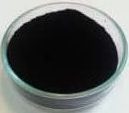
The Indian market for advanced materials is at an inflection point. The convergence of a skilled workforce, a burgeoning electronics manufacturing ecosystem, and strong government support creates a unique opportunity for leadership in adhesive technology. A key trend is the intense research into cost-effective, high-performance fillers. While silver has been the traditional choice, its high cost is a significant barrier. This is where nano carbon black for conductive adhesives comes into focus. Indian labs are actively exploring how different grades of carbon, including graphene and carbon nanotubes, can be used as a primary carbon additive to achieve the desired electrical conductivity.
Another critical area is the science of nano dispersion. The challenge is not just adding a nano filler to a resin; it's about achieving a perfectly uniform distribution to create a reliable conductive network. Poor dispersion leads to inconsistent performance, a critical failure point in electronic assembly. Indian researchers are developing advanced dispersion techniques and surfactants tailored for specific resin and filler combinations. Success in this area will be a major differentiator, enabling the domestic production of world-class conductive adhesives. The government's focus on self-reliance ('Atmanirbhar Bharat') further fuels the need for local R&D in sophisticated adhesive formulation, reducing dependence on imports and creating a robust domestic supply chain for these critical materials.
Recommended Products for Your Research


Frequently Asked Questions
A conductive adhesive is a type of bonding agent that contains conductive filler materials, allowing it to conduct electricity. It's used as a lead-free alternative to solder in electronic assemblies, providing both a physical bond and an electrical connection.
Nano fillers like nano carbon black create a percolating network within the adhesive matrix. When the concentration of these nano fillers reaches a certain threshold (the percolation threshold), they form continuous pathways for electrons to flow, drastically increasing the material's electrical conductivity.
Key advantages include lower processing temperatures (protecting sensitive components), flexibility and resistance to thermal/mechanical stress, being lead-free and environmentally friendly, and enabling the assembly of complex, miniaturized electronic components where soldering is impractical.
Nano dispersion is the process of uniformly distributing nano fillers within the adhesive resin. Proper dispersion is critical because it prevents clumping and ensures the formation of a consistent conductive network, leading to reliable and predictable electrical performance in the final conductive bonding.
Ready to Advance Your Research?
Explore our range of high-purity carbon nano materials and conductive additives to power your next innovation in adhesive technology.
View Carbon Products