
The Invisible Threat: Why EMI Shielding is Mission-Critical for India's R&D and Industry
In our hyper-connected world, we are surrounded by a sea of invisible electromagnetic waves. From our smartphones and Wi-Fi routers to industrial machinery and defense systems, electronic devices are constantly emitting signals. While this technology powers our modern lives, it also creates a significant challenge: Electromagnetic Interference (EMI). EMI, or radio-frequency interference (RFI), is the "noise" generated by one electronic device that disrupts the operation of another. This can manifest as static on your radio, a dropped call, or, in critical applications, a complete system failure.
For a nation like India, with its ambitious "Make in India" initiative, burgeoning space program (ISRO), and rapid expansion in telecommunications (5G rollout), defense electronics, and automotive sectors, managing EMI is not just a technicality—it's a strategic imperative. The reliability of a satellite, the safety of an aircraft's avionics, the accuracy of medical equipment, and the security of data centers all depend on effective EMI protection. Failure to shield sensitive components can lead to data corruption, equipment malfunction, and significant safety risks.
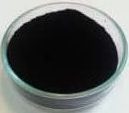
Traditionally, engineers have relied on metal-based solutions—like enclosures, gaskets, and metallic paints—for EMI shielding. While effective, these methods often come with drawbacks: they are heavy, bulky, prone to corrosion, and can be expensive and difficult to integrate into complex, compact designs. This is where material science innovation comes in. The focus for researchers and manufacturers in India is now shifting towards advanced materials that offer superior performance without these limitations. At the forefront of this evolution is conductive nano carbon black, a revolutionary shielding additive for creating high-performance, lightweight, and versatile conductive coatings.
Advantages for the Indian Researcher: Why Nano Carbon Black is a Game-Changer
For material scientists, chemical engineers, and product developers in India, working with conductive nano carbon black as an EMI shielding additive opens up a new frontier of possibilities. It addresses the core limitations of traditional materials and provides a toolkit for innovation. Here are the key benefits:
- Exceptional Shielding Effectiveness (SE) at Low Loading: Thanks to its unique morphology and high electrical conductivity, nano carbon black can achieve excellent EMI shielding with a much lower concentration (loading level) compared to conventional fillers. This preserves the mechanical properties of the base polymer or paint.
- Drastic Weight Reduction: This is perhaps the most significant advantage. Coatings formulated with nano carbon black are incredibly lightweight, making them ideal for aerospace, drones, and portable electronic devices where every gram counts. This directly translates to better fuel efficiency and longer battery life.
- Design Flexibility and Conformal Coating: Unlike a rigid metal box, a conductive coating can be sprayed or painted onto complex shapes and flexible substrates. This allows for complete, seamless shielding of intricate components without altering the product's form factor.
- Superior Corrosion Resistance: Carbon is inherently resistant to oxidation and chemical corrosion, a major weakness of metal-based shielding, especially in India's diverse and often humid climates. This leads to longer product life and greater reliability.
- Cost-Effectiveness and Scalability: As a conductive filler, nano carbon black can be more economical than using silver, copper, or nickel flakes. The application process (spraying, brushing) integrates easily into existing manufacturing lines, making it a scalable solution for mass production.
- Enhanced Material Properties: Beyond EMI shielding, nano carbon black can also improve the mechanical strength, UV resistance, and thermal conductivity of the host material, adding further value as a multifunctional coating enhancer.
Industry Applications: Powering India's Tech Ecosystem
Aerospace & Defense
In military communication systems, radar, avionics, and drones, reliable operation is non-negotiable. Lightweight EMI protection from conductive coatings shields sensitive electronics from enemy jamming and environmental interference without adding prohibitive weight, enhancing mission capability and stealth.
Telecommunications & 5G
The high-frequency signals of 5G are more susceptible to interference. Shielding base station components, server racks, and network equipment with nano conductive coatings ensures signal integrity, reduces data loss, and prevents crosstalk, forming the backbone of a reliable digital infrastructure.
Automotive & EVs
Modern vehicles are packed with electronic control units (ECUs), sensors, and infotainment systems. In Electric Vehicles (EVs), the high-power inverters and battery management systems are major sources of EMI. Carbon black coatings protect these systems, ensuring vehicle safety and performance.
Medical Devices
The accuracy of diagnostic equipment like MRI machines, ECGs, and patient monitoring systems is paramount. Effective EMI shielding prevents external interference from compromising measurements, ensuring patient safety and diagnostic reliability. The biocompatibility of carbon is an added advantage.
Future Trends & Opportunities in the Indian Market
The demand for advanced EMI shielding solutions in India is on an upward trajectory, driven by powerful national and global trends. The push for indigenous manufacturing under the "Make in India" and "Aatmanirbhar Bharat" initiatives is compelling Indian companies to develop and adopt homegrown technologies. Sourcing high-performance materials like conductive nano carbon black for EMI shielding coatings domestically or from reliable partners strengthens the supply chain and fosters local innovation. As India becomes a global hub for electronics manufacturing, the need for efficient, scalable, and cost-effective EMI protection will become a key competitive differentiator.
Furthermore, the Internet of Things (IoT) is connecting billions of devices, from smart home appliances to industrial sensors. Each of these devices is a potential source and victim of electromagnetic interference. Creating compact, low-cost shielding for these countless nodes is a massive challenge and a significant market opportunity. Flexible electronics, including wearable sensors and bendable displays, represent another growth area where traditional rigid shielding is impractical. Thin, flexible carbon black coatings are perfectly suited to provide the necessary shielding without compromising the device's form factor.
For Indian researchers, this is a fertile ground for R&D. There are immense opportunities in optimizing dispersion techniques, developing hybrid fillers (e.g., carbon nanotubes with graphene), and formulating multi-functional coatings that provide EMI shielding along with thermal management and environmental protection. Collaborations between academia and industry will be key to translating laboratory breakthroughs into commercially viable products that can power India's technological future.
Recommended Products for Your Research


Frequently Asked Questions
Electromagnetic Interference (EMI) shielding is the practice of protecting electronic devices from interference caused by electromagnetic fields. It is crucial for ensuring the reliability, performance, and longevity of sensitive electronics in sectors like telecommunications, aerospace, medical, and consumer electronics.
Nano carbon black, when dispersed in a polymer or coating matrix, forms a conductive network. This network can absorb and dissipate incoming electromagnetic waves, converting them into thermal energy, thus preventing them from reaching and interfering with the sensitive components inside the device. Its high aspect ratio and excellent conductivity make it highly effective even at low concentrations.
Nano carbon black offers several key advantages: it is significantly lighter, more flexible, resistant to corrosion, and often more cost-effective. It allows for the creation of thin, conformal coatings that do not add significant weight or bulk to the final product, which is a major benefit for portable and aerospace applications.
No, these coatings are designed for ease of application using standard industrial methods like spraying, dipping, or brushing. The key to effective shielding is achieving a uniform dispersion of the nano carbon black particles within the coating resin, which is facilitated by using high-quality, well-formulated conductive nano carbon black products.
Ready to Innovate?
Empower your research and development with high-purity conductive nano materials. Explore our product range or contact us to discuss your specific application needs.
Contact Us